Showing posts with label Book Review. Show all posts

Wednesday, January 3, 2018

Ruins by Achy Obejas

Ruins 
Achy Obejas
2009
205 pages, drama, character study
Found: A signed first edition (!) at a secondhand bookstore somewhere in India

Usnavy, a proud veteran of the Cuban revolution, is as much of a straight-shooter as it is possible to be. Despite the deprivations that have made life miserable for him and his family, he refuses to do anything illegal. The other employees at the bodega (government ration supply store) may sell products out of the back before they can be parceled out, but Usnavy refuses. He is happy to do the most miserable of government jobs - and be the one who gets abused about the lack of supplies or the need to collect funds for public projects - because he truly believes in his country and the purpose of the Revolution.

Where everyone else has given up, Usnavy continues to go on, an idealist till the end.

And then one of his best friends leaves the country by boat, and recruits Usnavy's help. And Usnavy is suddenly compromised for the first time. And suddenly Usnavy becomes truly aware of the deprivations and the ways he could make money to better himself and his family's position.

Hunger and food shortages


This book is best at getting you into the head of someone dealing with great deprivations, especially those caused by food shortages. There is no way that the government can provide enough food for people, so they are left to scrounge around for whatever they can find (or buy, or steal, or sell). Usnavy's constantly empty, rumbling stomach is an unceasing companion. The author conveys this all-consuming hunger so viscerally that I could feel my own stomach twisting as I read it:

Usnavy watched as [his wife] Lidia served up a sandwich for [their daughter] Nena that he recognized as having what looked like a reddish-brown meat. His immediate fear was that it was cat flesh. As a delighted Nena ate - complimenting Lidia, savoring the little bits of what looked like onions - Lidia kept busy, avoiding Usnavy's eye.... Of all people, of course, he knew that the only ingredient she'd gotten legally for that sandwich was the bread. (35)
But no sooner had Usnavy pulled up the bread and seen the flat layer of pith covered in seasoning, than he recognized its true provenance: These were pieces of a blanket normally used for mopping floors which [their neighbor] Rosita had beaten and marinated in spices and a little beef broth.... At least it wasn't cat meat, he thought. 
Then he bowed his head in dismay and disbelief. (37-8) 
What happens when basic necessities are only available on the black market, and you have to do illegal (and sometimes immoral) things to get the cash to pay for them? Especially if you believe so strongly in the rightness of the government and the society that you are a part of?

These are all moral questions that Usnavy struggles with in this book, and the constant hunger lends a sense of urgency and desperation to everything. What won't someone do when faced with such a situation?

Fear of flight


Usnavy spends much of the book trying to prevent his daughter from running away - from fleeing to the US, which beckons more and more with every day of starvation. It seems so close, and yet it is so far from everything that Usnavy ever wanted for her, or for them.

Usnavy has always been made fun of for being light-skinned, having red hair, and being so naive as to truly believe in the revolution. But he has also been fighting for the revolutionary values because he does not want things to change. He wants his struggle in the war to be worth something; he wants his country that he fought for to be worth something. And somewhere in his mind he worries that it is maybe not worth anything after all. What is the use of a country that can't even provide its own people with food to prevent starvation?

So he vehemently opposes the flood of people leaving the island for brighter shores, but also wonders when he will have to follow them. When he will himself turn traitor to the cause that he spent his life serving.

And of course that terrifies him.

Gender issues


I cannot write a review without examining the very delicate but incisive discussion of gender issues in this book. 

First, Usnavy's wife and daughter seem like women who have been forced to give up their desires for the sake of the man in their life (i.e., Usnavy). Lidia, Usnavy's wife, used to be a driver for a hospital, and, as Usnavy mentions, was "one of the first women to really excel at the job." However, due to budget cuts she was laid off and not provided with an alternative job that would pay appropriately. So now she is stuck in their tiny apartment, trying to eke out meals from the tiny amount of supplies that her husband brings home. 

Their daughter, Nena, is in a similarly stuck position. Not only will Usnavy not allow her to break any of the oppressive government rules, but she is stuck between school and home because he will not allow her to access his bicycle - not even as a loan! 

While Usnavy does give some thought to his family's position (especially in terms of hunger), his thoughts are mostly on himself. He never asks whether Lidia and Nena are ok with giving up opportunities to follow his principles. Usnavy spends most of his time outside of the house, whether at the bodega or playing dominoes with his friends; when he is not at home, he still takes up most of the space with his large stained-glass lamp (more on this below). It is a very claustrophobic situation for the two women, and there seems to be little thought on Usnavy's part about whether they really want a life like this.

Second, the novel masterfully details how relatively uneducated, ordinary people deal with trans issues. The "son" of one of Usnavy's friends is in the US, where "he" is reportedly doing well. When "he" comes to visit, however, it turns out that she has transitioned. While her father knew (and seems accepting), he had been ashamed to admit that his son was now a daughter. And his fear appears to be justified when another friend reacts violently to the news. But Usnavy does not seem to have a problem with the situation; sure, it is a bit unusual, but then as a kid she was always different. I would be very interested to hear the thoughts of a trans individual on this aspect of the book, particularly how they read Usnavy's reaction to her transition. 

A jeweled mystery


Usnavy's life is consumed by a large piece of his family heritage: a beautiful glass lamp that not only provides some comfort and beauty to his otherwise bare, meager life, but also inspires him to make changes to that life later in the novel.

To relieve the gloom, the family's room - a breadbox, a shoebox - was illuminated by a most extraordinary lamp. Were it not for the sheer size of it, Usnavy could have built a second floor - a barbacoa - like many of his neighbors. Made of multicolored stained glass and shaped like an oversized dome, the lamp was wild. Almost two meters across, the cupola dropped down with a mild green vine-and-leaf motif that flowered into luscious yellow and red blossoms, then became a crimson jungle with huge feline eyes. (In truth, they were peacock feathers, but Usnavy had never seen or dreamt of peacocks, so he imagined them as lions or, at least, cats.) The armature consisted of branches at the top, black and fat to resemble the density of tree bark. They narrowed as they neared the edge, until they were pencil thin and delicate. The borders were shaped with the unevenness of leaves and eyelids, petals and orbs, in a riotous yet precise design. (17)

This glorious lamp is the source of Usnavy's greatest joy. He knows it has something to do with his family's past; it was a feature at his mother's house in his childhood, but she had never explained its provenance or how it had come into their family's possession. He spends hours just looking at the lamp, polishing it, making sure it glows with all possible intensity. This obsession seems to take precedent over everything else in his life, including his family members.

It is only when a chance encounter shows him that there are other lamps like his (although smaller, less elaborate, not as beautiful) that he realizes he is sitting on a goldmine. He begins to use his knowledge of the lamp and its brothers to make some money, to improve the family's state of living. He sells the other lamps and the glass from the other lamps, but he is reluctant to touch his own unless absolutely desperate. And so he begins to walk a fine line: neglecting his official work in favor of an alternative industry of selling glass, while also refusing to allow anyone to see his own lamp. Eventually all of this has to catch up with him, somehow.

I absolutely loved this novel, and I cannot recommend it highly enough. It is both a good literary investigation of life in Cuba during the early years of the Special Period and a brilliantly written and paced novel.

Further Reading

"Was the 'Special Period' a Cuban Invention?" by Dmitri Prieto (Havana Times) 
"Cuba’s 'Special Period' Remembered" by Irina Pino (Havana Times) 
"The Maleconazo, Cuba’s First Popular Revolt, Happened 23 Years Ago" by Ivan Garcia (Translating Cuba)


Want to see more reviews of world literature and film? Follow me on Twitter or like The Globally Curious's facebook page!

Tuesday, April 11, 2017

Moogavani Pillanagrovi (Ballad of Ontillu) by Kesava Reddy, translated by the author

Moogavani Pillanagrovi (Ballad of Ontillu)
Kesava Reddy
Translated by the author (Telugu)
First published 1993, I read 2013 translation
114 pages, common man's tragedy, mental illness

Many thanks to Oxford University Press India for providing a review copy of this book.

After being forced to sell his land, an elderly farmer faces a mental breakdown that finally ends in his death.

This is my first video review! Watch it here:


References: 

Accidental Deaths and Suicides in India 2014 (National Crime Records Bureau)
"Centre must step in to stop farmer suicide, Madras HC says" by A Subramanil (Times of India)


Further reading:


"Why Farmers are Protesting with Human Skulls at Jantar Mantar" (thewire.in) (video)
"BJP ignoring farmer suicides by pushing for stricter cow slaughter laws: Sena" (Hindustan Times)
"West Bengal: Potato farmers commit suicide even after bumper harvest" by Indrajit Kundu (India Today)
"India's sugarcane farmers: A cycle of debt and suicide" by Janos Chiala (Al Jazeera)
"Stories of survival: Widows of India's farmer suicides" by Deepti Asthana (Al Jazeera)
"Why Bihar Sees Fewer Farmer Suicides Than More Developed States" by Sanjiv Phansalkar (Huffington Post India)


Want to see more reviews of world literature and film? Follow me on Twitter or like The Globally Curious's facebook page! And don't forget to subscribe to my Youtube channel for more videos! 

Thursday, March 16, 2017

Behind the Painting and Other Stories by Siburapha, translated by David Smyth

Behind the Painting and Other Stories
Siburapha (Kulap Saipradit), 1905-1974
Translated by David Smyth (Thai)
Translation first published 1995, I read 2000 Silkworm edition
160 pages, psychological drama, romance, plight of the poor

Many thanks to Silkworm Books for providing a review copy of this book. 

Behind the Painting is Siburapha’s most acclaimed novel, a tale of the repressed romantic feelings between a young Thai student studying in Japan and an older, married Thai woman on holiday there. According to the introduction, this novel is the best example of  Siburapha’s early writing: romantic stories based on the upper classes of Thai society during the interwar period.

His later stories, however, draw upon his Communist politics to portray the plight of the poor and working classes. The three short stories in this collection provide a sample of his later work, which contrasts with the novel in almost every way. Because of these differences, I will review the novel and the stories individually.

Behind the Painting (serialized 1937-1938)


When an elderly member of the Thai nobility contacts him, the young Thai student Nopphon agrees to arrange their travels in Japan, where he is studying. The elderly man is accompanied by his younger wife, Mom Ratchawong Kirati, and Nopphon’s quick friendship with her soon blossoms into love. When he reveals this to her, she refuses to respond in kind and requests that he hide his feelings. However, it is evident that her actions are bound by her difficult circumstances - and therein lies the essential tragedy of this short novel.

There are several important cultural insights that can be gleaned from this beautifully written novel. First, Mom Ratchawong Kirati is stuck between a rock and a hard place: she feels like she must preserve her looks to be liked in the society; at the same time, she is prevented from going out into society because of her rank as a member of the nobility. At this time, nobles were required to act in specified ways that marked their difference from the peasantry - they were not allowed to pursue certain careers, interact with certain lower-class people, travel to certain places or in certain ways, and so on. (I will discuss this further in my forthcoming review of Many Lives by Kukrit Pramoj.) These restrictions and enforced isolation from society prevent her from living as she desires, and prevent her from even looking for love. This leads her to agree to marry a man who is significantly older than her, whom she does not love and who does not love her.

Thursday, January 5, 2017

Jeevichirikkunnavarkku Vendiyulla Oppees (Requiem for the Living) by Johny Miranda, translated by Sajai Jose

Jeevichirikkunnavarkku Vendiyulla Oppees
Requiem for the Living 
Johny Miranda
Translated by Sajai Jose (Malayalam)
2013
87 pages, ethnography, family drama

Thank you to Oxford University Press, India for providing a review copy of this book. This is part of the Oxford India Novellas series, which translates short works from Indian languages into English. 


An oppees is a prayer for the dead. This novella tells the story of a people who are eligible for an oppees in every way, while yet alive. - Author's Note

Josy (Osha) Pereira is the latest in a line of church sacristans in a village near Kochi, Kerala. His family belongs to the Parankis - a Christian group with mixed bloodlines due to centuries of Portuguese rule and trade in the area.

In a winding narrative, Osha tries to explain his life to the reader: his grandmother Mammanji's almost magical religious/traditional healing abilities; his father's desertion of the family in order to go on pilgrimage; his own hapless marriage and inability to connect with his wife; and, most importantly, his unique community and the religious and cultural values that it reveres.

Women and Men


As noted by J. Devika in her fantastic introduction, one of the central issues in Osha's story is the struggle between men and women in this community, and in Kerala as a whole. While Kerala is widely regarded as one of India's most developed and progressive states - with the highest rate of female literacy in the country and a higher percentage of women in the population than men - the actual story is much more complex. Keralite women do work outside of the home, and many have jobs that are considered "man's work" in the rest of India. Historically, several of the ruling groups have also been matrilineal, tracing their lineage through the female line and placing the elderly women in the family in a position of great power (but limited mobility).

Perhaps related to this history of female power and (limited) autonomy, Keralite society brims with an existential crisis of masculinity. This is reflected in many ways: restrictions on women's movement and strict gender separation in some public places and transportation; high rates of crimes against women; and a tendency toward machismo on the part of men, who feel that they must prove their manhood. This last aspect (expressed primarily through the need to be right at all times, even if demonstrably wrong) that has been particularly pronounced in my dealings with Keralites during the year I lived in a village near Kochi.

This novella does a great job of depicting these ideas and attitudes. Osha's life is dominated by powerful and influential women, and he does not know how to deal with this. He feels emasculated: why does he have to rely on his mother or grandmother, and why are his male relatives so ineffectual in comparison to them? Osha's existential angst, which he treats with alcohol and laziness, highlights this major problem in Keralite society.

Ethnographic Details


This novella is unique in that it is written by a member of the Paranki community from Kochi, a forgotten and marginalized group that does not fit into Kerala's highly stratified and purity-conscious society. As the translator notes in his introduction, much of the culture depicted in the novel is unfamiliar even for Malayalam readers: the "extremely local references" to Kochi Creole/Paranki culture and religion call for a detailed glossary of terms and rituals, provided at the end of the book. 

Osha also seems to be aware of how marginal his community is; he often stops to explain the significance of various rituals, terms, or clothing. This adds an additional flavor to the narrative: he is evidently addressing someone outside of his group, and wants to reveal something about his heritage and life. Luckily for the reader, this provides a detailed look at this fascinating religious, cultural, and ethnic minority, the history of which is further elucidated in J. Devika's introduction. 

While I did not like this story, per se, I do recommend this novella for the ethnographic information it provides about Keralite society and this particular community. If you are at all interested in cultural mixing, Indian Christians, or minority communities, I highly recommend this book. 


Further Reading: 


"Tribute to Cochin Creole Portuguese," an interview with Dr. Hugo Canelas Cardoso by K. Pradeep (The Hindu)
"What Led to the Decline of the Matrilineal Society in Kerala?" by Sheryl Sebastian (Feminism in India)


Want to see more reviews of world literature and film? Follow me on Twitter or like The Globally Curious's facebook page!

Thursday, October 20, 2016

Blackass by A. Igoni Barrett

Blackass
A. Igoni Barrett
2015, I read PDF review copy
304 pages, social satire, speculative

Many thanks to Kachifo Limited for providing a review copy of this novel. 

Furo Wariboko awoke this morning to find that dreams can lose their way and turn up on the wrong side of sleep. He was lying nude in bed, and when he raised his head a fraction, he could see his alabaster belly, and his pale legs beyond, covered with fuzz that glinted bronze in the cold daylight pouring in through the open window…. His hands were not black but white… same as his legs, his belly, all of him.

Thus begins this Kafkaesque satire about race relations in Nigeria. Furo wakes on the morning of a big job interview to find that he has suddenly turned White – complete with red hair and blue eyes. Escaping from his house, he turns up at the job interview and, as a White man, finds that not only his job prospects, but every other aspect of his life has significantly improved.

Being White in a post-colonial society


Furo encounters all of the things that I, myself, have experienced or witnessed as a White person living in a post-colonial society (in my case India). Using the same qualifications that had lost him numerous opportunities in the past, as a White man he is immediately offered a good job. People trust him enough to give him money within two minutes of meeting him.

He also receives intense stares everywhere he goes:
Lone white face in a sea of black, Furo learned fast. To walk with his shoulders up and his steps steady. To keep his gaze lowered and his face blank. To ignore the fixed stares, the pointed whispers, the blatant curiosity. And he learnt how it felt to be seen as a freak: exposed to wonder, invisible to comprehension.
As a White man, Furo is expected to act a certain way; when he doesn’t fulfill people’s expectations they become surprised and start to question him. When he tries to eat in a roadside restaurant, for example, people stare and ask why he is there. To escape the stares, he goes into one of the city's fancy shopping malls (which he has never previously entered), and fakes casualness while drinking an incredibly expensive coffee. As a White person, he is not only expected to have a lot of money, but also to fit naturally into high society.

Thursday, September 22, 2016

The Timehrian by Andrew Jefferson-Miles

The Timehrian
Andrew Jefferson-Miles
2002
110 pages, post-modern, speculative

Thank you to Peepal Tree Press for providing a review copy of this book. 

After awaking from a six-year madness, Leon-Battista Mondaal writes to his cousin in an attempt to express what he has experienced. The result is this poetic novel that can never tell a straight story, but nevertheless reaches toward the truth - of Guyana’s colonial and post-colonial past, of ethnographic practice, and of the relationships between people.

This book is essentially a prose poem, for better or for worse. At times, it becomes almost incomprehensible, such as:

The tidal wave that swept all away possessed a sort of hybrid vigour that reached over our best attempts at correction. It exhibited an evenhanded kind of intervention in our affairs, entangling and suborning layers and institutions and environments. Former legacies are converted into new bodies whilst old shapes enter the squall and masquerade of memory, whose disguises enact majestic instability in our conception of ourselves. It is a complex, a charged phenomenology of practice and custom intensifying communities diverse in their origins, orientations, dictions.

I don’t usually enjoy reading poetry, but I will try my best to pull out what I understood from this text.

Colonialism and ethnography


Immediately before the tidal wave that caused Leon-Battista’s descent into madness, he was working with an ethnographic team recording the traditional Christmas masquerade in a Guyanese coastal village. However, he seems to be uncomfortable with the whole process, and especially with the functionalist and colonial attitude of Laban, the group’s leader and a renowned anthropologist.

Part of what Leon-Battista points out is a common critique of early forms of anthropology (before the “reflexive turn”). As he notes,

Conventional epistemes for the study of man (social relativism in anthropology, ethnolology, ethnography) tend to benefit least those about whom the study is made. Those about whom the study is made rarely get to participate in it. 

As a discipline, anthropology now recognizes these issues and does its best to rectify them (or at least to be aware of them and their effects on a study) through participative modes of ethnography and research.

However, it seems that Leon-Battista is also referring to the colonial attitudes of some ethnographers, who treat the people they study as a way to produce knowledge, nothing more. Laban is a “native anthropologist:” originally from Guyana, he has returned as a celebrated academic to study his “native” culture. Despite this apparent belonging, he still treats his research participants as subjects of study rather than real, three-dimensional people.

History 


Another issue that Leon-Battista brings out is the complicated history of the area, from both an ecological and cultural standpoint. Apart from the colonists that came from Europe, the people in the area are also the descendants of African slaves, Indian indentured servants, and the Amerindian inhabitants of the area. As all of these groups have combined to form the society of present-day Guyana, so has the environment of the country changed under their influence.

Overall, I did not enjoy reading this book. It was only after I finished it that I realized how thought-provoking it is. If you enjoy reading poetry and/or are interested in experimental writing, you might want to give this one a try.


Want to see more reviews of world literature and film? Follow me on Twitter or like The Globally Curious's facebook page!

Thursday, September 15, 2016

What Sunny Saw in the Flames by Nnedi Okorafor

What Sunny Saw in the Flames
Nnedi Okorafor
2016, I read pdf review copy
315 pages, YA, speculative

Many thanks to Cassava Republic Press for providing a review copy of this book!

Sunny Nwazue is a young girl who does not quite fit in. She was born in the United States to Nigerian parents, but is growing up in Nigeria. She is also an albino, which is a big deal in Nigeria where they are sometimes considered witches or people who talk to ghosts. Her skin’s sensitivity to sun also prevents her from playing soccer, which is one of her passions.

She discovers that she actually does have some magical abilities: she is a “Free Agent,” or someone able to do magic (a Leopard Person) who is born into a non-magical (Lamb) family. Now, apart from learning about her abilities with her new friends, Sunny has to keep her new identity a secret from her family, do twice the normal amount of homework, and deal with a magical serial killer who is targeting children.

Magical Universe


In this story, there is an alternate society of Leopard People: some live in the Lamb community, and others live in special, magical places, such as Leopard Knocks. In Leopard society, Free Agents like Sunny are discriminated against, as evidenced by the obvious racism in the in-universe book Fast Facts for Free Agents which Sunny uses to learn about the magic community. Most of the chapters end with an excerpt of this deplorable book, providing a glimpse into the racism that Sunny will experience.

The magic here is juju, and it uses a lot of blood and sacrifices. The most-used magical implement is a juju knife, which is about the size of a child’s hand and is unique to each magical person. Each individual also has a “spirit face,” which is considered very private and is the source of their power.

Sunday, August 7, 2016

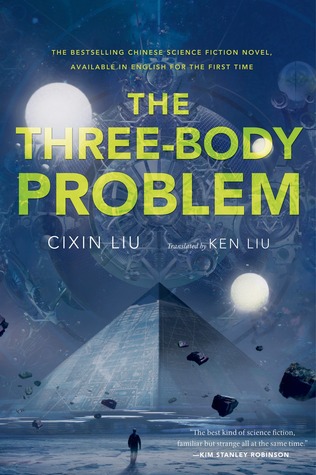
The Three-Body Problem by Cixin Liu, translated by Ken Liu

The Three-Body Problem
Cixin Liu
Translated by Ken Liu (Chinese)
Originally 2006, I read 2014 translation
415 pages, hard science fiction
Found: Barnes and Noble, West Chester, Ohio, USA

Caught up in the chaos of the Cultural Revolution, astrophysicist Ye Wenjie finds herself working for a secret government project after her father is brutally murdered for being an "intellectual." What should she do when she discovers the first sign of intelligent alien life?

In the present, Wang Miao is a researcher working on nanomaterials who is pulled into a secret government investigation of an international organization called the Frontiers of Science. Strange things begin happening - things that seemingly break the laws of physics. His one major lead is the online virtual reality game called Three Body, which seems to hold some of the answers he is searching for.

The scientific problem and the virtual world


Probably the most unique part of this book is the integration of virtual reality with the main storyline. While Wang Miao initially plays as part of the investigation, he soon becomes fascinated by the game for its own sake: it poses a complicated physics puzzle that appeals to his scientific mind.

Friday, July 22, 2016

The Shadow of the Wind by Carlos Ruiz Zafón, translated by Lucia Graves

The Shadow of the Wind
Carlos Ruiz Zafón
Translated by Lucia Graves (Spanish)
First published 2002, I read 2005 Phoenix paperback
510 pages, gothic romance, mystery, adventure
Found: super cheap at the Kochi Book Fair 2015

A bookseller takes his 11-year-old son Daniel to a very special place: a hidden building in Barcelona where there is a collection of lost, neglected, or forgotten books. As a privilege of visiting for the first time, Daniel is allowed to choose one book to take with him. He chooses The Shadow of the Wind by Julian Carax, which quickly becomes his favorite novel.

But when he tries to find out more about this author, mystery arises. Julian Carax is unknown, and it is believed that he died shortly after the War. And then there is the faceless man who is searching for Daniel’s prized copy with the intention of burning it and any other copy of Carax’s work that appears - and who has taken on the name of a character from The Shadow of the Wind who is the Devil incarnate.

Master storytelling in the vein of nineteenth-century novels


Zafón’s work is quite obviously inspired by the best of 1800s literature. He combines an incredible feel for gothic-style literary tension with a gorgeous, poetic writing style that left me enthralled. While leisurely at first, the pace quickly picks up and drags the reader along, wondering what will happen next.

There is grand adventure around every corner in this novel. Haunted houses, magical libraries of forgotten books, and blind love interests - anyone who loves The Count of Monte Cristo or other large-hearted adventure novels will love this book as well.

Wednesday, July 13, 2016

Goat Days by Benyamin, translated by Joseph Koyippally

Goat Days
Benyamin
Translated by Joseph Koyippally
First published 2008, I read 2012 translation
255 pages, fictional memoir

Thank you to Penguin India for providing a review copy of this book. 

When I first moved to Kerala last year, I wrote to my contact at Penguin India asking for review copies of novels written by Malayali authors, especially ones that were translated from Malayalam. I expected that reading these novels would help me to understand the culture that I was now immersed in.

In fact, the opposite happened: my experience of living in Kerala, and especially my husband’s experiences of working closely with Keralites, has made me intimately familiar with Malayali attitudes and society, even without knowing the language at all. So instead of this novel helping to understand the society, my knowledge of the society will help me to discuss the deeper social implications of this novel.

In this novel, a poor Malayali man named Najeeb gets the opportunity to go to one of the countries in the Persian Gulf – probably Saudi Arabia – to take up a relatively lucrative job. However, when he arrives he discovers that his dreams have led him to the exact opposite of what he expected: instead of a comfortable, air-conditioned flat and a job in construction, he finds himself working as a slave in the middle of the desert, herding goats, sheep, and camels, and living without even a shelter to protect him from the sun’s heat. Set in 1991, this shows the flip side of Malayali migration to the better-paying jobs on the Arabian peninsula.


Opportunities Abroad


Going to another country to make money seems like it would be a big decision that would require planning. However, Najeeb displays an astonishing lack of forethought regarding this move. In his own words,

How long have I been here, diving for a living? How about going abroad for once? Not for long. I am not greedy. Only long enough to settle a few debts. Add a room to the house. Just the usual cravings of most Malayalis…. Can one go hungry? I have, in the past. But things are different now. Now, at [my Mom]’s insistence, I am married. My wife is four months pregnant. Expenditure will now mount up like sand.

Wednesday, June 8, 2016

Jazz by Toni Morrison

Jazz
Toni Morrison
Originally 1992, I read Plume 1993
229 pages, drama, literary fiction
FOUND: Half Price Books, Hamilton, OH, USA

A middle-aged man shoots his 18-year-old lover, and then his wife attacks the body at the funeral. But what came after, and what before? In this beautifully lyrical novel, told in Toni Morrison’s signature style, an anonymous narrator tells how this event came to be and what each character’s past and future holds – and how the City has come to shape each of them and their expectations of each other.

I have been fascinated by Toni Morrison’s writing since I first read Beloved in a high school English class. That book was a bit too gory and explicit for my teenaged self, so I waited a few years before reading more. This book is the second in a loose trilogy, following Beloved and followed by Paradise – all of which contain similar themes about the history of African Americans in the USA, particularly the role of Black women in that history.


Grief and Guilt


Joe, the man who killed his lover, is filled with grief in that action’s aftermath. He cries and cries and is unable to do anything else. And it seems that he’s not just mourning for his young, dead lover: he’s mourning for himself, for his past, and for who he used to be.

Thursday, June 2, 2016

Like a Mule Bringing Ice Cream to the Sun by Sarah Ladipo Manyika

Like a Mule Bringing Ice Cream to the Sun
Sarah Ladipo Manyika
2016, I read advance review copy
129 pages, comedy, everyday

Many thanks to Cassava Republic Press for providing a review copy. Cassava Republic is a major Nigerian publisher and has just started a new operation in the UK. This is one of their first UK titles. 

Dr. Morayo Da Silva is a retired English professor living in San Francisco. As she goes about her daily life, she comes into contact with other ordinary people, each one extraordinary in their own way. In this gorgeous little book, tiny everyday actions and interactions – buying flowers, visiting a friend, reading a book – come to life and reveal their true importance.

The Everyday


Small things that are apparently ordinary tend to get lost amongst the “bigger issues” in life. But they are no less important –in fact, they are what life is made of. Morayo embraces the beauty of the everyday and engages with life and with other people at a profound level. For example, when Morayo sees a young homeless woman on the road, she stops to check if she is ok. This leads to a conversation that goes deeper than normal, superficial small talk, cutting through to what is really important.

Morayo used to be married to a Nigerian diplomat, so she has travelled extensively and lived in many countries across the world. This multicultural background helps her to appreciate the vibrancy of the world around her in San Francisco, to delight in the little pleasures that remind her of places she has been or people she used to know. This gives her narrative a great depth and ingenuity that is a pleasure to read. She is one of those characters who would be a great friend, if she were real.


Read the rest of my review on Shiny New Books.


Want to see more reviews of world literature and film? Follow me on Twitter or like The Globally Curious's facebook page!

Sunday, April 10, 2016

Ghosts by Curdella Forbes

Ghosts
Curdella Forbes
2012
179 pages, fictional memoir, speculative, psychological

Many thanks to Peepal Tree Press for providing a review copy of this novel. 

In a future marked by massive environmental changes, a family from the fictional Caribbean island of Jacaranda comes together to write about their brother many years after his death.

This is a strangely mixed book. Is it a memoir? Is it fantasy? Is it a myth? I think it’s all of those. But more than that, it's a beautiful piece of writing.

Grief


This is a book about grief. Grief and guilt. Each of the siblings is sad about their brother’s death, and afraid that they could have done something to prevent it. Evangeline, the Seer in the family, knows what will happen beforehand: could she have stopped it? Their mother was worried about Pete for years, but no one else listened to her. Should they have? When they disapproved of his actions and his personal life what should they have done? Should, should should should.

The major source of this guilt is the family's treatment of Pete when he was alive. His star-crossed, taboo infatuation with a cousin caused deep rifts in the otherwise (at least on the surface) tight-knit family. Later, when he married a woman that his family did not approve of, the family split into factions, led by: his mother, who forbid her daughter-in-law from entering the house; and Evangeline, whose enlightened knowledge places her on a different spiritual field. This leads to the effective ostracism and isolation of Pete, something that the whole family bitterly regrets after his death. In many ways, this is a cautionary tale: don't let your personal disapproval get in the way of a relationship with your relatives.

Thursday, April 7, 2016

Chewing Gum by Mansour Bushnaf, translated by Mona Zaki

Chewing Gum 
Mansour Bushnaf
Translated by Mona Zaki (Arabic)
Originally 2008, I read ebook of 2014 translation
126 pages, satire

Many thanks to Darf Publishers for providing a review copy of this novel. 

“Our hero looked on as our heroine walked away in the rain, wrapped in her black coat and red shawl. Ten years went by before he was able to whisper into her ear again, ten years during which he remained standing in the exact spot where she had left him in the park, enduring his terrible suffering. Days went by, then months, and years. He waited in the rain while she walked on, hoping she would stop, turn and run back. Her red shawl fluttered gently as she headed towards the sunset, revealing her black shoulder-length hair.”

So begins this story – a satirical fable about life in Libya, centered around these two characters and the park where our hero waits in the rain. The tale is told in dreamlike vignettes with a different focus on almost every page; some of these are only tangentially related to the two main characters. This creates a fully formed, if piecemeal, narrative that critiques Libyan society from the pre-colonial period to the present day.


Actor Network Theory


While other reviewers have noted the existential nature of this novel, I want to highlight something completely different: the way that these various narrative strands correspond to Actor Network Theory, or ANT.

Stick with me here.

ANT is a social science theory that emphasizes the fact that everything (from sunlight to a can of coke to the person drinking it) is an actor, or active player. Everything happens because of the actions of innumerable actors, and every action has an effect on innumerable actors. If you look at any scenario widely enough, you can trace these connections.

In this novel, Bushnaf looks at the circumstances of his two main characters from exactly this angle. He examines the park - its history, who goes there, and why it gains attention. Actions hundreds of years ago, such as the building of a pleasure palace, still have repercussions in the present and future. A statue of unknown origin has incredible effects on its viewers. Even estranged blood relationships have significant effects.

It is for this reason that the narrative, if you want to call it that, expands so much without bursting and becoming overdone. All of these disparate stories are intimately related, and the author emphasizes the importance of that relationship.

Satire


This novel is written in a highly satirical tone with frequent breaking of the fourth wall. The narrator wants to convey the absurdity of life under the changing Libyan governments. It pokes fun at everyone: from the Italians with their finely manicured parks, to the excesses of the Ottoman rulers, to the brutality and repression of the Gaddafi regime. Although I am not familiar with Libyan history, these often hilarious anecdotes were not difficult to connect with, and I highly enjoyed this novel. I recommend it for anyone who likes satire or expansive, existential cultural critiques.


Want to see more reviews of world literature and film? Follow me on Twitter or like The Globally Curious's facebook page!

Friday, April 1, 2016

Hurma by Ali Al-Muqri, translated by T.M. Aplin

Hurma
Ali Al-Muqri
Translated by T. M. Aplin (Arabic)
First published 2012, I read ebook of 2015 translation
166 pages, cultural critique, psychological

Many thanks to Darf Publishers for providing a review copy of this book! 

A nameless female narrator from Yemen attempts to reconstruct her childhood and youth. Her formerly communist brother, who became a radical Islamist. Her scandalous sister who was allowed free rein because of her high-paying job. The sex tapes she and her friends watched in secret. The fatwas that restricted every part of her life. Her marriage to a jihadi.

This psychologically complex book provides the insider woman’s viewpoint of restrictive Islamist society, jihadis and terrorism. More than that, it examines the thought processes of a “radicalized” female terrorist from childhood to adulthood.

Sex


In this novel, women feel the full power of a religiously supported patriarchy. They are expected to follow innumerable fatwas that limit their actions, clothes, speech, and thoughts with the sole purpose of removing their sexuality - but in the same breath they are constantly sexually objectified. It is a no-win scenario, in which the narrator can never find sanctuary from objectification regardless of how hard she tries to follow the rules.

The first memory that the narrator recounts is the extreme punishment she was given for drawing a heart on a piece of paper in school. She was in 4th grade, and had no idea what this symbol meant! She was immediately knocked unconscious by her teacher, after which they summoned her father to school to be reprimanded for not “bringing her up properly.” This, of course, was followed by beatings – and even more beatings when she asked her mother what she had done. Even at such a young age and for such an innocent action, she is made into a sexual object that must be controlled through physical violence.

Monday, March 28, 2016

Congratulate the Devil by Howell Davies

Howell Davies (1896-1985)
Originally published 1939, I read 2008 
264 pages, science fiction

Thank you to Parthian Books for providing a review copy of this book, one of their Library of Wales series. 

When a wealthy layabout named Starling discovers that a class friend of his has something to do with a strange incident involving his uncle’s dog in the daytime in a park, he goes to investigate. Roper is a chemist who analyzes samples of drugs seized by the police. This newest shipment is strange – it has amazing mind-expanding properties. Starling is pulled into experimenting with Roper, and as his friend’s negative side becomes more and more pronounced, he wonders if he should do something… especially when Roper becomes interested in a girl he just met…

This novel is considered to be a classic of Welsh fiction, and has been republished as part of the Library of Wales series. 

Happiness and Misery


Starling and Roper are joined in these experiments by a Welsh street singer named Bert. Unlike the lazy Starling and the manipulative and cruel Roper, Bert is a good person. He is happy with his simple life and just wants to make people happy as much as he can. When Bert starts taking the drug, his natural instincts are enhanced. Instead of manipulative or evil, Bert becomes even more kind. More than that, he makes others happy and generous. 

Because of the properties of the drug, he exerts this influence over the surrounding population. To the dismay of the rest of the country, he makes an entire Welsh village happy. Why does this cause dismay? People begin to give their possessions away. The wife of the local squire bathes and feeds children from the slum. Inter-church arguments are immediately resolved. The pub is open all the time and people start living openly with their mistresses. 

This frightens the government and, in general, everyone outside of Bert's sphere of influence. The government does not want the established social order to be overturned. In fear of the spreading of this generosity, rich people start to hide their belongings. It's complete chaos, and requires military action. This is a brilliant satire: the milk of human kindness is so threatening to the established social and governmental order that it must be overturned.   

Overall, I didn’t really like this novel. Parts were an interesting critique of power and politics, and about the nature of society, but overall it’s just really dark and dreary. If you like Victorian-era science fiction like The Strange Case of Dr. Jekyll and Mr. Hyde you would probably like this book. 

Also read my review of From Empty Harbour to White Ocean by Robin Llywelyn

Want to see more reviews of world literature and film? Follow me on Twitter or like The Globally Curious's facebook page!

Wednesday, March 23, 2016

A Legend of the Future by Agustín de Rojas, translated by Nick Caistor

A Legend of the Future
Agustín de Rojas
Translated by Nick Caistor (Spanish)
Original published 1985, I read ebook of 2014 translation
227 pages, hard science fiction

Many thanks to Restless Books for providing a review copy of this novel, part of their Cuban Science Fiction series. 

A tight-knit crew of six cosmonauts has embarked on the cutting-edge ship Sviagator. Their mission: explore Titan, one of the moons of Saturn, and return the experimental ship safely to Earth. When disaster strikes, only three crewmembers survive: Isanusi, the captain, who is physically incapacitated; Thondup, an engineer and psycho-sociologist, who is emotionally fragile after the death of his partner Alix; and Gema, a physiologist whose conditioning has been activated so now she has all the skills of a computer. All three of them are dying, some more quickly than others. Now they need to figure out how to return the ship to Earth, without autopilot and without any of them being able to survive the three months required to make the trip.

Philosophy, politics, psycho-sociology


This book involves a lot of sitting around talking. Granted, due to their assorted physical disabilities there’s not much else the crew can do at this point, but it struck me as incredibly wordy. This sometimes passed into being really boring. There are a few themes that keep appearing, and which provide the majority of the plot:

First, the novel explicitly touches on the philosophical question of man vs. machine. Even though Thondup activated Gema’s conditioning, he doesn’t approve of it; he believes she has been made into a computer. Isanusi does not agree. Gema spends much of her time trying to combine her new personality with pieces of the old one, but the question still remains about whether she is actually a human being anymore. If you read a lot of science fiction (particularly older works), this is nothing that you haven't seen before.

Sunday, March 20, 2016

Chronicler of the Undead by Mainak Dhar

Chronicler of the Undead
Mainak Dhar
2015
172 pages, speculative, zombie

Thanks to Westland Ltd. for providing a review copy of this book. 

When the zombie apocalypse happens, an Indian army veteran with one leg and broken dreams of becoming a writer finds himself stuck in a bungalow in the mountains above Gangtok, Sikkim. Luckily, this is a relatively safe location – but who knows how long it will last, or if anyone else has survived. Or what exactly happened.

He starts to keep a journal to distract him from his current circumstances, and continues to write in it as he meets with other survivors and eventually finds himself becoming the leader of the group. Can he help the others survive?

Zombie story with a twist


This is a fairly standard zombie story, with survivors attempting to live in the chaos after the end of the world. But there are a couple differences that make this one stand out, at least a little bit, from other novels in this genre.

First, there is the location: Gangtok, Sikkim. I’ve been there; it’s a gorgeous city among steep hills, very near the Chinese-Indian border. If you know anything about the history of relations between China and India, you know what that means: a history of war, disputed borders, and major political problems. In many ways, the unique location of this book (geographic, political, and cultural) provides a good deal of the plot.

Second, our protagonist is not only an ex-soldier; he is an ex-soldier with only one leg who has to hold his own in intense fighting. He does it, but he has constant trouble with his prosthetic leg. Probably my favorite part of this book was the way he reacted to this disability: it causes problems, but in the end he is no less capable than he would be with two legs.

The narrator himself is very relatable in his flaws, and the novel is written in a casual tone that conveys the pain and inadequacy that he feels. Even better is how he takes everything in stride, with a bit of humor when called for, making the book a fun read.

If you like zombie books, I think you would like this one – it’s not the best book ever, but it’s a decent read if you want something pulpy to pass the time.

Further Reading: 

Read my review of The King's Harvest by Chetan Raj Shreshta, also set in Sikkim

Want to see more reviews of world literature and film? Follow me on Twitter or like The Globally Curious's facebook page!

Wednesday, March 16, 2016

Teresa's Man and other stories from Goa by Damodar Mauzo, translated by Xavier Cota

Damodar Mauzo
Translated by Xavier Cota (from Konkani)
2014
200 pages, short story, drama
Found: Rupa Publications bookstore, College Street, Kolkata

This collection of ironic short stories covers a wide variety of social and familial issues. Throughout, there is a feeling of frustration: at the oppression of women, at politics, at self-serving protestors, at communalism. While I didn’t enjoy every story (especially "Teresa's Man"), I did appreciate the social messages that the author wanted to communicate. I can see why he is considered to be one of the best authors in Konkani. 

“From the Mouths of Babes”
Mithila lives in Saudi Arabia, where her husband is working for an international company. She struggles with the lack of intimacy forced upon her by the government and the religious police, especially because she has to wear a burka and is not allowed to show any affection for her husband in public. 

“In the Land of Humans”
Halsid’du is driving a line of cattle to Goa to be sold to the butcher when something happens that makes him unable to complete the journey as planned. 

“Misconceptions”
Sulbha is plagued by her lack of children and by a house full of rats that eat her best saris. She and her husband go to the temple to get god’s blessing for fertility.

“The Cynic” 
Baboy is a confirmed cynic of medicine, doctors, and soap. But what happens when his little grandson becomes ill? 

“She’s Dead!” 
Two rival politicians from Goa arrive in Delhi and plan to have a night on the town, as friends. Then one of them receives a call saying that the other’s wife has died, and he must break it to him gently. 

Friday, March 11, 2016

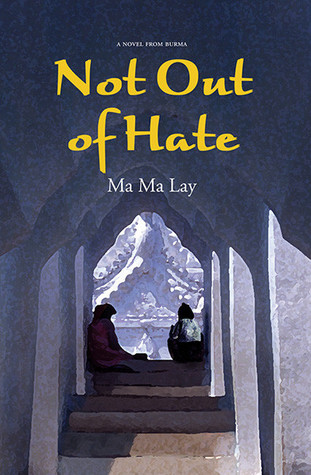
Not Out of Hate by Ma Ma Lay, Translated by Margaret Aung-Thwin

Not Out of Hate
Ma Ma Lay (Ma Tin Hlaing) (1917-1982)
Translated by Margaret Aung-Thwin (Burmese)
Original published 1955; I read 1991 English translation, Silkworm Books 2006 edition
216 pages, psychological, social commentary, love story(?)

Many thanks to Silkworm Books for providing a review copy of this book, and for meeting with me when I visited Chiang Mai, Thailand. 

Trigger warning for discussion of intimate partner abuse.

Way Way is a 17-year-old girl who has been brought up in a traditional Burmese family. Her father runs a rice export business, and her mother left several years ago to become a Buddhist nun. Way Way dearly loves her father and, as the only child left at home when his health takes a turn for the worse, cares for both him and the business.

When a new neighbor arrives, a thoroughly Anglicized Burmese man named U Saw Han, Way Way is struck by his sophistication. She becomes ashamed of the difference between U Saw Han’s English style (of food, furniture, clothing, and so on) and her own rural Burmese style. U Saw Han, in turn, is struck by the contradiction between Way Way’s apparent innocence and childlike behavior and the responsibilities she takes on in the household and business. When they get married, Way Way realizes that his British airs, and his insistence that she also follow them, are not actually what she wants – but at that point there’s no turning back.

Abuse


After their marriage, U Saw Han is thoroughly abusive toward Way Way, although he doesn’t seem to realize it. “Out of love” he prevents her from eating the food she likes, wearing clothes that she wants to wear, and even visiting her ailing father. This culminates in refusing to allow her to visit her dying father after she receives an urgent telegram.