Showing posts with label IFFP 2015. Show all posts

Sunday, May 31, 2015

IFFP 2015 winner

The winner of the 2015 Independent Foreign Fiction Prize for both the Shadow panel and the official panel is....

Jenny Erpenbeck's The End of Days, translated by Susan Bernofsky from the German! You can read my review here.

I would also like to give special mention to Zone by Mathias Enard, translated by Charlotte Mandell. Zone barely lost to The End of Days in the final shadow panel voting. You can read my review here. 

Reading together with the other members of the shadow panel was a great experience; for once, all of us book bloggers had actually read the same books! This allowed me to really get a feel for what the other bloggers are interested in, and made for some very good discussions.

But I was less than satisfied with the books that made the IFFP longlist. They were not diverse enough for my taste (at least 9 out of the 16 we read were from Europe...), and took me too far away from the regions that I am most interested in.

I thought that maybe shadowing the American Best Translated Book Award might be more to my taste. But then I saw that my least favorite book from the IFFP longlist, Can Xue's The Last Lover, which I found completely unintelligible, won the BTBA this year. So maybe I wouldn't like that award better.

I am happy that I did the shadow panel this year, as it gave me the opportunity to make friends and read some books that I loved (Zone, Bloodlines, The Ravens) that I wouldn't have picked up otherwise. But I don't see myself doing it again next year.

Want to see more articles like this? Follow me on twitter or like The Globally Curious on facebook

Tuesday, May 26, 2015

The End of Days by Jenny Erpenbeck, translated by Susan Bernofsky

The End of Days 
Jenny Erpenbeck
Translated by Susan Bernofsky (from German)
2012, I read 2014 ebook version
239 pages, meditation, family, politics, life and death

A baby dies and the family falls apart.
But what if it didn't?
A young woman commits suicide after being rejected in love.
But what if she didn't?
A German emigre to the Soviet Union is accused of Trotskyism and sent to a work camp, where she dies.
But what if she wasn't?
A famous East German writer dies falling down the stairs.
But what if she didn't?
The same woman dies comfortably in a nursing home at the ripe age of 90.

Jenny Erpenbeck's novel traces the life of a woman in Europe during the 20th century, and, specifically, how she could have died at different parts in her life and what the fallout would be for those around her. The author gives us five scenarios, connected by musings on how things could have turned out differently, if, for example, she had gone down the stairs five minutes later. Then, the following section assumes that she had not died, and the alternative scenario is the one that actually happened.

It's sort of like a choose-your-own-adventure book for grown-ups.

In less capable hands, this style of writing could have turned into a terrible gimmick. But Erpenbeck manages to pull it off, all while including some beautiful commentary about the connections between people and the role of history in our lives. While not my favorite book from the IFFP longlist, I can understand why it has such widespread appeal.

Thursday, May 21, 2015

Zone by Mathias Enard, translated by Charlotte Mandell

Zone
Mathias Enard
Translated by Charlotte Mandell (from French)
2014, I read ebook version
528 pages, reflection on war, internal monologue

Francis Servain Mirkovic is taking a train from Milan to Rome with only a suitcase - a suitcase filled with sensitive information from his 15 years working for the French Intelligence Service with a specialization on the Mediterranean basin, especially the war-torn regions of Northern Africa and the Middle East, where he travelled extensively to meet with contacts from all sides of the conflicts; he is traveling to Rome to finally hand off that information to a representative of the Vatican, which will allow him to escape from the chaos of his "Zone" as his area of specialization is called in the business, although it won't allow him to go home; although he was born and raised in France, he is of Croatian origin, and by joining the Croatian army during the Balkan Wars, he identified with his ethnic origin, although now he has little connection with the new states formed after that war, so he has fallen into the abyss of truly not belonging anywhere but having ties, information, and interests everywhere; hopefully the woman he hopes is still waiting for him in Rome will be happy to see him, and will accept the change of his name, taken from a man from his neighborhood in Paris who has been in a psychiatric hospital for many years, and maybe they will even be able to run away together and he will escape his past once and for all and become a truly new person with no Zone and no need to remember the atrocities committed there, but now while he's on this train he must find a way to while away the time; he brought a novel along, which is set in his Zone, recommended by a woman in a bookshop who couldn't know about him could she?

Enard uses this intense, impelling prose to describe Francis's inner monologue during the entirety of his train journey. The result is a meditative investigation of war, violence, and what it does to a person when he or she gets involved, either directly or through research.

Wednesday, May 13, 2015

Colorless Tsukaru Tazaki and His Years of Pilgrimage by Haruki Murakami, translated by Philip Gabriel

Source: Goodreads
Colorless Tsukaru Tazaki and His Years of Pilgrimage
Haruki Murakami
Translated by Philip Gabriel (from Japanese)
First published in Japanese in 2013, I read 2014 translation
298 pages, friendship, loss, grief, rediscovery

In high school Tsukaru Tazaki had four close friends, two girls and two boys. Except for Tsukaru, everyone's name had a color in it: Blue, white, black, and red. He felt a bit left out. But for years, until Tsukaru's second year in the University, the five of them were the best of friends.

That was when they suddenly banished him from their group, giving no explanation and cutting off all contact.

At the age of 36, Tsukaru is still drifting, unable to form intimate relationships. He lives in Tokyo and has a good job designing railway stations, something he has been interested in since he was a little kid. Then he meets Sara, a hard-working professional who wants to know about his high school life during their first date. Surprised, he finds himself opening up to her. His search begins - to discover what happened all those years ago, to meet his friends again, and to mentally heal himself so he can begin a new relationship.

This is the first Murakami book I have ever read and I absolutely loved it. I was very happy to see that it made both the shadow panel and official International Foreign Fiction Prize shortlist. I look forward to reading more works by Murakami in the future.

Wednesday, April 22, 2015

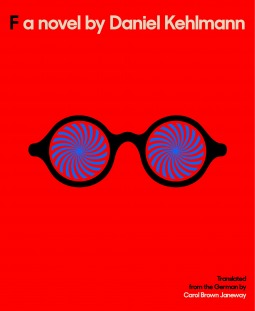
F by Daniel Kehlmann, translated by Carol Brown Janeway

Source: Goodreads
F
Daniel Kehlmann
Translated by Carol Brown Janeway (from German)
2014, I read ebook version
208 pages, family drama, tragicomedy, adult siblings

When Arthur Friedland chooses to take his three teenage sons - the twins Eric and Ivan, and Martin (from a different mother) - to a hypnotism show as a bonding experience, no one could have guessed that he would be so influenced by the hypnotist's words that he would end up leaving his family that night and disappearing without a trace.

Years later, the three men have a complicated relationship with their now-internationally-acclaimed author father, who sometimes appears, checks on them, and then disappears just as suddenly.

Martin is a priest who struggles with overeating and doesn't believe in God. Eric is a successful businessman who actually has lost all of his clients' money and is cheating on his wife. Ivan is an art critic who has a secret: he creates the paintings that are supposedly the work of a very in-demand artist who died several years ago.

The brothers, each struggling with his own existential crisis, rarely see each other - and yet, on at least one day, their paths overlap.

To me, the most impressive part of this book was how the author managed to convey Eric's frayed mental state. He is so confused and anxious that he is constantly distracted; when he meets Martin after a long time, he isn't even able to hold a coherent conversation with him. Even though Eric's relationship with his twin Ivan is very strong, he chooses not to rely on it: in fact, Eric avoids contacting his twin brother because he knows Ivan understands him too well. If anyone finds out about how his life is going, it will all finally fall apart.

Ivan's story is also rather compelling: he is actually the artist who has created these famous paintings, but there would be no market for them if the world knew that he made them. While he is technically lying, it is sadly in his best interest to do so.

I quite enjoyed this book and how each of the brothers' stories fit together like pieces of a puzzle. It was clever. But I did not think the overall novel was particularly memorable, and I was very surprised to see it on the official International Foreign Fiction Prize shortlist. I would recommend it for when you want to read something clever but not especially brilliant.

See the rest of the IFFP shadow panel's reviews here.


Want to see more reviews of world literature and film? Follow me on Twitter or like my facebook page!


Sunday, April 12, 2015

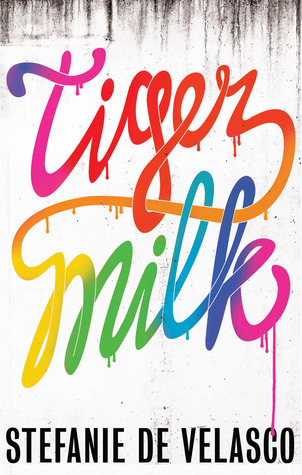
Tiger Milk by Stefanie de Velasco, translated by Tim Mohr

Source: Goodreads
Tiger Milk
Stefanie de Velasco
Translated by Tim Mohr (from German)
2014, I read ebook edition
245 pages, friendship, immigrant story, poor families, loyalty, drugs sex and alcohol

Nini and Jameelah, two high school students in Berlin, are the best of friends. They spend their time hanging out, sneakily drinking Tiger Milk (a concoction of brandy, milk, and passion fruit juice that they invented) in public, doing drugs, and making pocket money by prostitution. When they witness a murder in their housing complex, will they risk their own safety and tell the police what they saw? Even if that might mean Jameelah will be deported, one of their friends will be put in prison, and their friendship may very well end?

This is not the kind of book that I normally read, but for the sake of IFFP, I finished it. Some parts made me feel physically sick, especially the way the girls respond to the murder: Jameelah takes the victim's jewelry, dropping it into their container of Tiger Milk, which she then drinks from. (I forgot to mention that they also like shoplifting, which involves wandering through stores with open containers and dropping jewelry into the drink. They don't even keep most of the things they steal.) If Tiger Milk doesn't sound bad enough already, why don't you add some fresh blood to it as well?

I appreciate that this author is attempting to show the edgy side of teenage life among poor people in Berlin. The writing shows the point of view of the characters, and encourages the reader to have some sympathy for the people in the story. If you like that sort of thing, you might like this book.

The author also demonstrates some of the struggles that immigrant families face in present-day Germany. Jameelah and her mom are immigrants from Iraq, and have been in Germany long enough that Jameelah doesn't even know Arabic. And yet they find themselves facing possible deportation back to Iraq if the government finds that they have done something wrong. Obviously this is unfair on Jameelah, who has only ever known what it's like to live in Germany.

Overall, this was my second-least favorite book from the IFFP longlist. It was only surpassed by The Last Lover, which was so bizarre I couldn't even understand what the book was trying to say. I'm glad that Tiger Milk did not make either the shadow panel or the official shortlist. (Read the shadow panel's reviews of all the longlist books here.)

If you're interested in edgy Young Adult books about sex, drugs, alcohol, and murder, you might like this book. If not, avoid it.

You can buy Tiger Milk from Amazon or wherever books are sold. 

Did you like this review? Keep in touch! Follow The Globally Curious on Twitter or Facebook

Wednesday, April 8, 2015

Independent Foreign Fiction Prize shadow panel shortlist

The shortlists for the IFFP have finally been announced! And boy, does our list differ from the official one.

The Shadow Panel shortlist: 


Bloodlines by Marcello Fois, translated from the Italian by Silvester Mazzarella
See my review here

Saturday, April 4, 2015

By Night the Mountain Burns by Juan Tomás Ávila Laurel, translated by Jethro Soutar

Source: Goodreads
By Night the Mountain Burns
Juan Tomás Ávila Laurel
Translated by Jethro Soutar (from Spanish)
2014, I read ebook version
288 pages, oral history, ethnography, tragedy

Told in the style of an oral history, a man from a small island near Africa recounts stories of his childhood, especially a series of terrible events that happened during a few years. These include a major fire, famine, shortages due to lack of trade, an epidemic, and the murder of a woman accused of being a witch. He focuses on the impact all of these events had upon life on the island and, in so doing, provides a detailed ethnographic description of the island's population.

An important character is the narrator's silent grandfather, who never leaves the second floor of their house and who barely speaks to anyone. This mysterious grandfather spends all of his time sitting on the balcony and staring at the island's mountain, which is even stranger since the sea (which is very important in this society) is nearby and in the opposite direction.

I did not know that Equatorial Guinea is the only Spanish-speaking country in Africa. I'm happy that & Other Stories Press decided to publish this novel to give international exposure to one of Equatorial Guinea's major writers.

Friday, April 3, 2015

Bloodlines by Marcello Fois, translated by Silvester Mazzarella

Source: Goodreads
Bloodlines
Marcello Fois
Translated by Silvester Mazzarella (from Italian)
2014, Maclehose Press
288 pages, family history, historical novel

After his wife dies, a blacksmith from a small village in Sardinia adopts an orphaned boy, Michele Angelo Chironi, and trains him to become a master blacksmith. When the boy has grown up, he falls in love with another orphan, Mercede Lai. They marry and begin to live in prosperity, with a bustling business, large forge, and their own vineyard.

The world gets in the way of their happiness, and the couple is plagued with misfortune when it comes to having children. Not only are there several miscarriages, but two of their sons are brutally murdered when they are only 10 years old. Of the three younger children, one enlists in the army during the first World War, one trains with his father to be a blacksmith, and the girl gets married to a person of rank.

Through the tale of this family in a remote region of Sardinia, the author demonstrates the far-reaching effects of modernity, development, and war.

Wednesday, April 1, 2015

In the Beginning Was the Sea by Tomás González, translated by Frank Wynne

Source: Goodreads
In the Beginning Was the Sea
Tomás González
Translated by Frank Wynne (from Spanish)
2014, I read Kindle edition
224 pages, relationship, escape to the land

Tired of the rushed, partying atmosphere of the city, a bourgeois couple moves to a run-down estate on the beach in rural Colombia. Here they can finally relax and get back in touch with nature, running a productive and self-sufficient farm. But is this retreat everything that they thought it would be?

As their idea of what the countryside would be like flounders, J. and Elena find themselves stuck in an untenable living situation. Nerves fray, fights break out, alcohol becomes the only way to escape. The local inhabitants do not live up to the expectations of the city people. It's a slow descent into chaos: never mind their relationship, will J. and Elena be able to escape with their lives intact?

Darkly humorous and based on a true story, this novel demonstrates the problems with assuming that a return to nature will solve all of your problems.

Sunday, March 29, 2015

The Last Lover by Can Xue, translated by Annelise Finegan

Source: Goodreads
The Last Lover
Can Xue
Translated by Annelise Finegan (from Chinese)
2014, I read Kindle edition
336 pages, avant-garde (?)

This book traces the (possibly) intersecting lives and stories of a group of people who are related through work: a man who just wants to disappear into books, his maybe-magical wife, his gardener son; his cheating boss and his boss's distraught wife; a client who owns a rubber plantation and his lover, and so on. As the book goes on, their stories become more and more confused and begin to run together until everything seems unreal.

I did not understand or like this book, and I was surprised that it was nominated for the 2015 IFFP. According to the Goodreads ratings and the opinions of the other Shadow Panelists, it seems that people either really like this book or they really don't. I would be one of the latter. I kept expecting someone to wake up and have the whole thing be a complicated dream, but no such luck. I was just as confused after reading the whole thing as I was at the beginning. I get that this is (probably?) the point, but it's not something that I enjoy.


Something that bothered me was the weird Orientalism present throughout the book. While the main characters are all from some unnamed Western country, the knowledge that they hope to find comes from the East. This includes the ending when all (?) of the characters wind up traveling throughout the East looking for some sort of knowledge (?). There is also a strange woman who apparently sleeps with all (?) the male characters and who is apparently from some sort of Oriental country. I was surprised to see this weird Orientalism in a Chinese novel. Maybe it's satirical? Since I didn't understand the book, maybe I also didn't understand the satire? It would be great if someone could explain it to me.

All and all, something that you might like if you're interested in really dreamy, avant-garde, far out stuff. Not something I am interested in at all. But one of the other Shadow Panelists mentioned that the author's short stories are good, so maybe I'll see if I like those better at some point.

Further Reading


An interview with Can Xue from Asymptote Journal 

The Last Lover can be purchased from Amazon or wherever books are sold. A sample is available from Amazon here

Want to see more reviews from The Globally Curious? Follow me on twitter or facebook to see the latest updates! 

Tuesday, March 24, 2015

The Giraffe's Neck by Judith Schalansky, translated by Shaun Whiteside

The Giraffe's Neck
Judith Schalansky
Translated by Shaun Whiteside (from German)
2014 Bloomsbury
211 pages, satire, science

In this darkly humorous book, an old-school (East German) biology teacher analyzes everything in terms of Darwin's theory of evolution. Despite the diminishing number of students and the new educational plans, she remains stolidly in her lifelong habits of inducing fear and respect in class.

How will Frau Lomark survive in a changing world?

This book is described as a Bildungsroman, a novel dealing with character formation, formal education, or a coming-of-age story. (Thanks to Stu at Winstonsdad's blog for pointing out the importance of this term in his review of The Ravens.) However, I have some doubts about the applicability of that term to this story.


Sunday, March 22, 2015

Shadow Panel Reviews: IFFP 2015

Because of my deep love for lists, I decided to put together a compilation of the reviews for each IFFP book written by members of the panel. I'll keep this updated as we go along.

I have followed the order of the shadow panel blogger list from the official page on Winstonsdad's blog.

Bloodlines by Marcello Fois


Stu (Winstonsdad's blog)'s review
Joe (roughghosts)'s review
Chelsea (The Globally Curious)'s review
Clare (A Little Blog of Books)'s review
David (David's Book World)'s review
Grant (1streading's Blog)'s review

Boyhood Island by Karl Ove Knausgaard


Stu (Winstonsdad's blog)'s review
Tony Malone (Tony's Reading List)'s review
Messy Tony (Messengers Booker)'s review
Clare (A Little Blog of Books)'s review
David (David's Book World)'s review
Grant (1stReading's blog)'s review

By Night the Mountain Burns by Juan Tomas Avila Laurel


Stu (Winstonsdad's Blog)'s review
Tony Malone (Tony's Reading List)'s review
Joe (roughghost)'s review
Messy Tony (Messengers Booker)'s review
Emma (Words and Peace)'s review
Chelsea (The Globally Curious)'s review
Julianne (Never Stop Reading)'s review
Clare (A Little Blog of Books)'s review
David (David's Book World)'s review

Friday, March 20, 2015

The Ravens by Tomas Bannerhed, translated by Sarah Death

The Ravens
Source: Goodreads
Tomas Bannerhed
Translated by Sarah Death (from Swedish)
2014 by Clerkenwell Press, I read Kindle edition
416 pages, tragedy, mental illness, coming of age

Trigger warning for discussion of mental illness, anxiety, depression, self harm, and suicide. 

A poor farming family in Sweden tries to cope with the father's rapidly increasing mental illness, especially his anxieties about losing their crops and animals. Meanwhile, his young teenage son Klas feels stifled by the expectation that he will take over the farm when he's old enough. Klas is very intelligent and would like to do anything other than farming, but he is wracked with guilt over his dislike for the family occupation. He finds solace in reading about and experiencing the natural world, especially in birdwatching. But as his father sinks deeper into depression, will Klas be able to adequately cope with the familial pressures and guilt that he encounters?

The Ravens is an incredibly realistic exploration of mental illness. In fact, it was so close to what I have experienced while dealing with my own mental illness that it was difficult for me to finish. The following review discusses both my own experiences and those described in the novel.

Friday, March 13, 2015

IFFP shadow panel and other news

Hello all,

Just writing a quick note to say that I am back from traveling (at least for the moment!), and have a bunch of good things in store for the next month or so.

First, I will be participating in the Independent Foreign Fiction Prize shadow jury this year. This prize honors the best work of fiction by a living author that has been translated into English and published in the UK in 2014. To read more about the prize, judges, and longlist, see here.

The shadow jury is a group of bloggers that will read the books on the official longlist, write reviews, and choose our own shortlist and IFFP winner. I am excited to participate in this project, and look forward to the opportunity to read a wide range of translated literature. You can find out about the members of the shadow jury and keep track of our progress here. Follow us on twitter to find out more about what we're up to!