Showing posts with label Zubaan Books. Show all posts

Wednesday, October 14, 2015

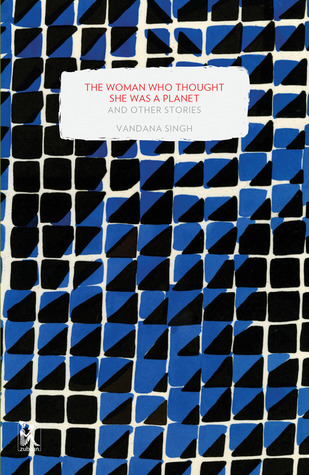
The Woman Who Thought She Was a Planet and Other Stories by Vandana Singh

The Woman Who Thought She Was a Planet And Other Stories
Vandana Singh
Originally 2008, I read 2013
206 pages, speculative, short stories, satire, social commentary
Found: Kolkata Book Fair 2015

The first Zubaan book I picked up, this collection of short stories is a brilliant addition to the Indian speculative fiction genre. The stories in this collection fall everywhere in the speculative fiction spectrum, including magical realism, hard science fiction, and anthropology-based science fiction, as well as a few that don't seem to have much to do with speculative fiction at all!

The Stories


  • "Hunger"

A housewife who would rather be reading science-fiction novels is stuck preparing for a fancy dinner party (ostensibly her daughter's birthday party but actually a networking event with the higher-ups in her husband's company). Meanwhile, she worries about the next-door neighbor's ill and neglected father-in-law.

  • "Delhi"

Aseem has the strange gift of being able to see through time: as he walks around Delhi, he catches glimpses of the people and buildings from the past and from the future.  One day he is contacted by an organization purporting to tell him the meaning of his life, which apparently has something to do with a picture of an unknown girl.

  • "The Woman Who Thought She Was a Planet"

Ramnath Mishra's retirement is rudely interrupted when his wife suddenly announces one morning, "I know at last what I am. I am a planet."

Monday, October 5, 2015

The Circle of Karma by Kunzang Choden

Kunzang Choden
2005, published by Zubaan
316 pages, woman's life story
Found: Kolkata Book Fair 2015

This book tells the life story of Tsomo, an illiterate woman from rural Bhutan. Tsomo’s life takes her to places she never expected – India, Nepal, Bodh Gaya – and through experiences that are unusual, to say the least. Although she was never able to learn how to read or write, she is a devout Buddhist. Illiteracy and illness cannot stop her from going on pilgrimages, or from becoming a devotee of Rinpoche, a refugee monk from Tibet. Or from finally becoming a nun toward the end of her life, focusing her energies on worship at the National Memorial chorten in Thimphu, the capital of Bhutan. Her life is one of suffering, friendships, travels, sickness, and joy – but that is just because of her karma.

Muddling through 


For personal reasons, Tsomo runs away from her family home when she is in her early 20s. When she arrives in Thimphu, she has no money, so she takes a job on a road-building crew, breaking rocks into gravel for long hours every day. As an illiterate, uneducated rural woman with few profitable skills and nowhere to call home, this job is the best she can hope for. But she doesn’t mind it, and because she is a friendly and garrulous person she manages to make friends that help her endure the hardship. Not wanting to stay on the road crew, she saves money and keeps moving, first arriving in Kalimpong, a Himalayan city near Darjeeling in India, and later going on pilgrimages farther to the west. While she moves frequently, she never really consciously decides to move: she is invited to travel with friends, or to stay with friends, or she likes a place and decides to stay. Because she is poor and homeless, there is no reason for her not to move to another place. In this unconscious way, she becomes relatively free of material attachments even before she becomes a nun.  

Friday, June 19, 2015

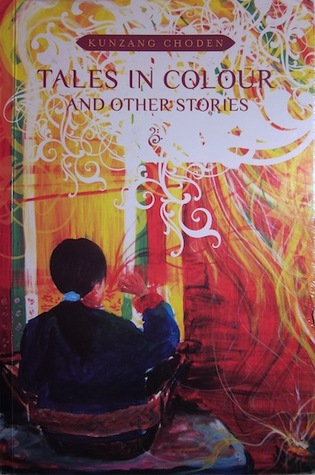
Tales in Colour and other stories by Kunzang Choden

Tales in Colour and other stories
Kunzang Choden
Originally 2009, I read 2012
145 pages, short stories, rural life, women's stories
Found: Kolkata Book Fair 2015

This collection of short stories by a female Bhutanese writer gives the reader access to a culture they would never otherwise be able to see: village life in the Himalayan Kingdom of Bhutan. The small kingdom perched in the mountains between India and China is famous for being one of the happiest countries in the world, but because of government rules restricting tourists and mandating a $200 USD/day minimum fee for all foreign tourists, it is notoriously difficult to travel in. Kunzang Choden's stories provide a much less expensive way to explore the Kingdom of Bhutan.

"The Woman who Lost her Senses"

In the village, traditional healers practice the Bon religion, a pre-Buddhist tradition that is frowned upon by the Buddhist monks. The healers channel the energy of a deity that is specific to each person, and they need to be taught how to do this properly (by someone with the same deity) or else they go mad. This story tells of a woman who was never taught and displays symptoms of this god-created madness.

"I Won't Ask Mother"

Yeshimo quit school at a very early age to take care of her ill mother and her three brothers. She envies them for being able to get an education and to have prospects in life, and wishes that she could learn more.

"The Advisor"

A woman rejected by her husband becomes the village busybody, giving everyone unsolicited advice- and continues to stick around even after she has died.

"These Things Happen"

Tensions arise between neighboring families when one of the girls is impregnated by a visiting official and blames her boyfriend, who lives next door.

"Look At Her Belly Button"

Tsewang Doma has been spending time in Thimphu with her brother and sister-in-law, escaping from the dull village life to go shopping and watch Hindi movies. She notices that the Hindi movie heroines have their belly buttons pierced, and she decides to stop at nothing before she gets one too.

Monday, May 4, 2015

The Bronze Sword of Tengphakhri Tehsildar by Indira Goswami, translated by Aruni Kashyap

Source: Goodreads
The Bronze Sword of Tengphakhri Tehsildar
Indira Goswami (1942-2011)
Translated by Aruni Kashyap (from Assamese)
Published by Zubaan 2013
132 pages, folklore, nationalist
Found: Kolkata book fair 2015

This is the last book by the well-regarded Assamese author Indira Goswami, known for her use of literature to advocate for social and political change. Drawing on the idea of a strong female character described in local Bodo folktales, Goswami demonstrates the importance of the Bodo people in the nationalist fight against the British colonialists and therefore in the formation of the Indian nation and the state of Assam (an important political statement due to the continued violence and calls for the creation of Bodoland as a separate state).

Tengphakhri is a tribal Bodo woman who was chosen to act as a Tehsildar, or tax collector, for the British in the late 1850s. Accompanied by her group of soldiers, she rode through the villages to collect taxes, using force if necessary. She has a close relationship with several of her British superiors, who she admires. When other British officers come to take over, leading to changes in policies, she is compelled to choose whether she wants to continue working with them or join the freedom movement.

The description of the character Tengphakhri is interesting. She is obviously a strong person, who can handle horses and do the duties required by her job. Like most women in fiction, "Her beauty and personality mesmerized everyone. They had just one complaint: why doesn't Tengphakhri speak?" She is mostly a silent character, and the story is told through descriptions of her sometimes ambivalent actions.

While this story is based on a folktale, it doesn't read like one. This is a flaw, in my opinion. The mostly emotionless descriptions of Tengphakhri's actions were not interesting to me. I did not enjoy this book for the story or the characters (who were disappointingly flat).

The only thing that seemed interesting to me is the way Goswami tried to use this book to protest against the violence in Assam related to the Bodoland movement. But because that was the purpose of this novel's existence, nationalist sentiments took center stage, stealing the focus from the characters and story. If you are interested in Assamese politics, especially the question of an independent Bodo state, you might find something in this book. If not, it's not really worth your time.

Further reading: 

Wikipedia article on Bodoland 
"Bodoland Movement: A Study" by Topu Choudhury (a scholarly article on the history of the movement) 
"Why is Indira Goswami Great?" by Aruni Kashyap (translator of this novel) 

Follow The Globally Curious on twitter or facebook to see more reviews of international movies and cinema!