Showing posts with label Read Women. Show all posts

Wednesday, January 3, 2018

Ruins by Achy Obejas

Ruins 
Achy Obejas
2009
205 pages, drama, character study
Found: A signed first edition (!) at a secondhand bookstore somewhere in India

Usnavy, a proud veteran of the Cuban revolution, is as much of a straight-shooter as it is possible to be. Despite the deprivations that have made life miserable for him and his family, he refuses to do anything illegal. The other employees at the bodega (government ration supply store) may sell products out of the back before they can be parceled out, but Usnavy refuses. He is happy to do the most miserable of government jobs - and be the one who gets abused about the lack of supplies or the need to collect funds for public projects - because he truly believes in his country and the purpose of the Revolution.

Where everyone else has given up, Usnavy continues to go on, an idealist till the end.

And then one of his best friends leaves the country by boat, and recruits Usnavy's help. And Usnavy is suddenly compromised for the first time. And suddenly Usnavy becomes truly aware of the deprivations and the ways he could make money to better himself and his family's position.

Hunger and food shortages


This book is best at getting you into the head of someone dealing with great deprivations, especially those caused by food shortages. There is no way that the government can provide enough food for people, so they are left to scrounge around for whatever they can find (or buy, or steal, or sell). Usnavy's constantly empty, rumbling stomach is an unceasing companion. The author conveys this all-consuming hunger so viscerally that I could feel my own stomach twisting as I read it:

Usnavy watched as [his wife] Lidia served up a sandwich for [their daughter] Nena that he recognized as having what looked like a reddish-brown meat. His immediate fear was that it was cat flesh. As a delighted Nena ate - complimenting Lidia, savoring the little bits of what looked like onions - Lidia kept busy, avoiding Usnavy's eye.... Of all people, of course, he knew that the only ingredient she'd gotten legally for that sandwich was the bread. (35)
But no sooner had Usnavy pulled up the bread and seen the flat layer of pith covered in seasoning, than he recognized its true provenance: These were pieces of a blanket normally used for mopping floors which [their neighbor] Rosita had beaten and marinated in spices and a little beef broth.... At least it wasn't cat meat, he thought. 
Then he bowed his head in dismay and disbelief. (37-8) 
What happens when basic necessities are only available on the black market, and you have to do illegal (and sometimes immoral) things to get the cash to pay for them? Especially if you believe so strongly in the rightness of the government and the society that you are a part of?

These are all moral questions that Usnavy struggles with in this book, and the constant hunger lends a sense of urgency and desperation to everything. What won't someone do when faced with such a situation?

Fear of flight


Usnavy spends much of the book trying to prevent his daughter from running away - from fleeing to the US, which beckons more and more with every day of starvation. It seems so close, and yet it is so far from everything that Usnavy ever wanted for her, or for them.

Usnavy has always been made fun of for being light-skinned, having red hair, and being so naive as to truly believe in the revolution. But he has also been fighting for the revolutionary values because he does not want things to change. He wants his struggle in the war to be worth something; he wants his country that he fought for to be worth something. And somewhere in his mind he worries that it is maybe not worth anything after all. What is the use of a country that can't even provide its own people with food to prevent starvation?

So he vehemently opposes the flood of people leaving the island for brighter shores, but also wonders when he will have to follow them. When he will himself turn traitor to the cause that he spent his life serving.

And of course that terrifies him.

Gender issues


I cannot write a review without examining the very delicate but incisive discussion of gender issues in this book. 

First, Usnavy's wife and daughter seem like women who have been forced to give up their desires for the sake of the man in their life (i.e., Usnavy). Lidia, Usnavy's wife, used to be a driver for a hospital, and, as Usnavy mentions, was "one of the first women to really excel at the job." However, due to budget cuts she was laid off and not provided with an alternative job that would pay appropriately. So now she is stuck in their tiny apartment, trying to eke out meals from the tiny amount of supplies that her husband brings home. 

Their daughter, Nena, is in a similarly stuck position. Not only will Usnavy not allow her to break any of the oppressive government rules, but she is stuck between school and home because he will not allow her to access his bicycle - not even as a loan! 

While Usnavy does give some thought to his family's position (especially in terms of hunger), his thoughts are mostly on himself. He never asks whether Lidia and Nena are ok with giving up opportunities to follow his principles. Usnavy spends most of his time outside of the house, whether at the bodega or playing dominoes with his friends; when he is not at home, he still takes up most of the space with his large stained-glass lamp (more on this below). It is a very claustrophobic situation for the two women, and there seems to be little thought on Usnavy's part about whether they really want a life like this.

Second, the novel masterfully details how relatively uneducated, ordinary people deal with trans issues. The "son" of one of Usnavy's friends is in the US, where "he" is reportedly doing well. When "he" comes to visit, however, it turns out that she has transitioned. While her father knew (and seems accepting), he had been ashamed to admit that his son was now a daughter. And his fear appears to be justified when another friend reacts violently to the news. But Usnavy does not seem to have a problem with the situation; sure, it is a bit unusual, but then as a kid she was always different. I would be very interested to hear the thoughts of a trans individual on this aspect of the book, particularly how they read Usnavy's reaction to her transition. 

A jeweled mystery


Usnavy's life is consumed by a large piece of his family heritage: a beautiful glass lamp that not only provides some comfort and beauty to his otherwise bare, meager life, but also inspires him to make changes to that life later in the novel.

To relieve the gloom, the family's room - a breadbox, a shoebox - was illuminated by a most extraordinary lamp. Were it not for the sheer size of it, Usnavy could have built a second floor - a barbacoa - like many of his neighbors. Made of multicolored stained glass and shaped like an oversized dome, the lamp was wild. Almost two meters across, the cupola dropped down with a mild green vine-and-leaf motif that flowered into luscious yellow and red blossoms, then became a crimson jungle with huge feline eyes. (In truth, they were peacock feathers, but Usnavy had never seen or dreamt of peacocks, so he imagined them as lions or, at least, cats.) The armature consisted of branches at the top, black and fat to resemble the density of tree bark. They narrowed as they neared the edge, until they were pencil thin and delicate. The borders were shaped with the unevenness of leaves and eyelids, petals and orbs, in a riotous yet precise design. (17)

This glorious lamp is the source of Usnavy's greatest joy. He knows it has something to do with his family's past; it was a feature at his mother's house in his childhood, but she had never explained its provenance or how it had come into their family's possession. He spends hours just looking at the lamp, polishing it, making sure it glows with all possible intensity. This obsession seems to take precedent over everything else in his life, including his family members.

It is only when a chance encounter shows him that there are other lamps like his (although smaller, less elaborate, not as beautiful) that he realizes he is sitting on a goldmine. He begins to use his knowledge of the lamp and its brothers to make some money, to improve the family's state of living. He sells the other lamps and the glass from the other lamps, but he is reluctant to touch his own unless absolutely desperate. And so he begins to walk a fine line: neglecting his official work in favor of an alternative industry of selling glass, while also refusing to allow anyone to see his own lamp. Eventually all of this has to catch up with him, somehow.

I absolutely loved this novel, and I cannot recommend it highly enough. It is both a good literary investigation of life in Cuba during the early years of the Special Period and a brilliantly written and paced novel.

Further Reading

"Was the 'Special Period' a Cuban Invention?" by Dmitri Prieto (Havana Times) 
"Cuba’s 'Special Period' Remembered" by Irina Pino (Havana Times) 
"The Maleconazo, Cuba’s First Popular Revolt, Happened 23 Years Ago" by Ivan Garcia (Translating Cuba)

Want to see more reviews of world literature and film? Follow me on Twitter or like The Globally Curious's facebook page!

Friday, March 11, 2016

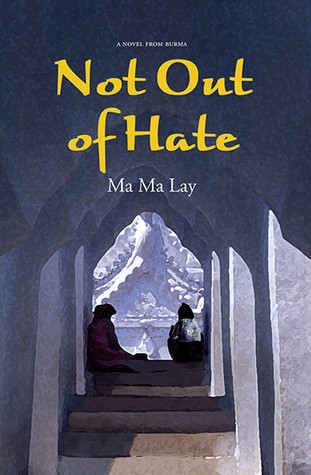
Not Out of Hate by Ma Ma Lay, Translated by Margaret Aung-Thwin

Not Out of Hate
Ma Ma Lay (Ma Tin Hlaing) (1917-1982)
Translated by Margaret Aung-Thwin (Burmese)
Original published 1955; I read 1991 English translation, Silkworm Books 2006 edition
216 pages, psychological, social commentary, love story(?)

Many thanks to Silkworm Books for providing a review copy of this book, and for meeting with me when I visited Chiang Mai, Thailand. 

Trigger warning for discussion of intimate partner abuse.

Way Way is a 17-year-old girl who has been brought up in a traditional Burmese family. Her father runs a rice export business, and her mother left several years ago to become a Buddhist nun. Way Way dearly loves her father and, as the only child left at home when his health takes a turn for the worse, cares for both him and the business.

When a new neighbor arrives, a thoroughly Anglicized Burmese man named U Saw Han, Way Way is struck by his sophistication. She becomes ashamed of the difference between U Saw Han’s English style (of food, furniture, clothing, and so on) and her own rural Burmese style. U Saw Han, in turn, is struck by the contradiction between Way Way’s apparent innocence and childlike behavior and the responsibilities she takes on in the household and business. When they get married, Way Way realizes that his British airs, and his insistence that she also follow them, are not actually what she wants – but at that point there’s no turning back.

Abuse


After their marriage, U Saw Han is thoroughly abusive toward Way Way, although he doesn’t seem to realize it. “Out of love” he prevents her from eating the food she likes, wearing clothes that she wants to wear, and even visiting her ailing father. This culminates in refusing to allow her to visit her dying father after she receives an urgent telegram.

Friday, February 12, 2016

The Cult of Chaos by Shweta Taneja

Cult of Chaos: An Anantya Tantrist Mystery
Shweta Taneja
2014
380 pages, speculative, mystery, detective
Found: some bookstore in Kolkata

I had to pick up this book when I saw the cover for the first time. Just look at this beauty!

In an alternative modern-day New Delhi, supernatural forces have come into the open: the tantrics, who have always practiced a form of magic, have formed an official government organization; gods walk among mortals disguised as fat businessmen; nagas and other supernatural creatures haunt special, magical bars; and one lone woman tantrist works as a detective, trying to keep these supernatural beings from killing each other – or at least, clean up after they are done.

Anantya is an incredibly strong spellcaster who knows her way around potions and magic of all sorts. Being the only major female tantrist (except for her reclusive guru), she faces a lot of scorn and disapproval, and her fiery temper often gets her into trouble. For all that, she is an excellent, quick-thinking detective with a talent for surveillance and fighting - and a need to protect those who no one else will. 

When a string of murders connected to illegal black tantrist rituals shocks the city, Anantya is called in to discover the culprits and their motivations. As the situation becomes more and more dire, she must use all of her skills, training, and contacts to stop these evil rites that hit closer to home than she even dares to think about.

Thursday, February 4, 2016

The Blood of Angels by Johanna Sinisalo, translated by Lola Rogers

The Blood of Angels
Johanna Sinisalo
Translated by Lola Rogers (from Finnish)
First published 2011, I read 2014 English translation
224 pages, eco-speculative, grief

Many thanks to Peter Owen Publishers for providing a review copy of this novel. 

In the near future,  Colony Collapse Disorder (CCD), which causes worker honeybees to suddenly vanish from their hives, has become a terrible threat to the human food chain. In the United States, it has caused food shortages and the collapse of the food production infrastructure. When Orvo, a solitary beekeeper in Finland, finds one of his hives empty except for a dead queen, he fears that the catastrophe has finally spread to Finland.

Then he suddenly finds a strange phenomenon: a window to another, uninhabited world. Does this have anything to do with the sudden disappearance of his bees? What about the death of his animal rights activist, teenaged son?

This novel details the beekeeper’s search for answers, interspersed with the posts and comments from his son's blogs.

Thursday, January 28, 2016

Dry Season by Gabriela Babnik, translated by Rawley Grau

Dry Season
Gabriela Babnik
Translated by Rawley Grau (Slovene)
Originally 2012, I read 2015 translation (ebook review copy)
Literary fiction

Many thanks to Istros Books for providing a review copy of this novel! 

Ana, a 62-year-old graphic designer from Slovenia, has run away to a completely foreign place – Burkina Faso. There she meets Ismael, a 27-year-old former street kid with a history of abuse, and they begin a relationship despite – or perhaps because of - their differences. As Ana and Ismael take turns telling us, the readers, about their complex and pain-filled lives, we wander with them further into the dream captivating them.

This novel plays with the stereotypes of the old white woman in Africa as a tourist and the street kid with a history of abuse. Ana and Ismael both are and are not prime examples of their stereotype. Underneath his rough exterior, Ismael thinks deeply and is widely read. He can engage intellectually with the world around him. He isn’t really the fighting, drug dealing street kid that the stereotype would lead you to expect – although he does get involved with those kinds of activities sometimes.

Ana tells us that she chose Burkina Faso because of its complete dissimilarity to where she came from. But the longer she stays, the more she realizes that this new place is not all that foreign after all; she has had similar affairs in the past (with dark-skinned, younger men) and this seems like a repeat all over again. Or did those other affairs actually happen?

Read the rest of my review at Shiny New Books.

Further Reading: 

"Gabriela Babnik" from the European Union Prize for Literature


Want to see more reviews of world literature and film? Follow me on Twitter or like The Globally Curious's facebook page!


Monday, December 21, 2015

The King and Queen of Comezón by Denise Chávez

Denise Chávez
2014, I read paperback edition
309 pages, character study, psychological

Thank you to the University of Oklahoma Press for providing a review copy of this book, part of the Chicana & Chicano Visions of the Américas series.

It is really important to me to include works by marginalized writers from the United States on this blog. I think it sends the wrong impression to only feature novels from “foreign” countries, whether in translation or in English; this blog is about the global diversity of literature and film,  including the native diversity in the US. That is why I have chosen to include this book by a major Chicana writer.

In Comezón, a small town on the Mexico-New Mexico border, everyone has some comezón – a yearning for something that will never happen. In this series of interconnected character studies, the author examines what each individual wants – and what, exactly, is keeping them from getting it.

The main focus is on the dysfunctional Olivárez family. Arnulfo, the aging father, is slowly (and quietly) dying of lung disease and alcoholism but continues to take the stage as master of ceremonies at the local Mexican-American festivals of Cinco de Mayo and 16th September. His wife, Doña Emilia, is disabled and cannot control Arnulfo, but she has the patience of an angel even when he doesn’t deserve it. Their daughter, Juliana, though bound to a wheelchair, has a rich inner life of reading and painting and a hidden love for the local Spanish priest. Arnulfo’s daughter by an affair, Lucinda, knows that she doesn’t quite fit into the family and wants to escape as soon as possible, running away with the son of Comezón’s Chief of Police. And then there is Isá, the housekeeper, cook, and best friend of Doña Emilia who also helps take care of Juliana.

With these and other characters from the town, the author takes us on a journey into the trials and tribulations – and loves and passions – of a small town on the Mexican border.

Wednesday, October 14, 2015

The Woman Who Thought She Was a Planet and Other Stories by Vandana Singh

The Woman Who Thought She Was a Planet And Other Stories
Vandana Singh
Originally 2008, I read 2013
206 pages, speculative, short stories, satire, social commentary
Found: Kolkata Book Fair 2015

The first Zubaan book I picked up, this collection of short stories is a brilliant addition to the Indian speculative fiction genre. The stories in this collection fall everywhere in the speculative fiction spectrum, including magical realism, hard science fiction, and anthropology-based science fiction, as well as a few that don't seem to have much to do with speculative fiction at all!

The Stories


  • "Hunger"

A housewife who would rather be reading science-fiction novels is stuck preparing for a fancy dinner party (ostensibly her daughter's birthday party but actually a networking event with the higher-ups in her husband's company). Meanwhile, she worries about the next-door neighbor's ill and neglected father-in-law.

  • "Delhi"

Aseem has the strange gift of being able to see through time: as he walks around Delhi, he catches glimpses of the people and buildings from the past and from the future.  One day he is contacted by an organization purporting to tell him the meaning of his life, which apparently has something to do with a picture of an unknown girl.

  • "The Woman Who Thought She Was a Planet"

Ramnath Mishra's retirement is rudely interrupted when his wife suddenly announces one morning, "I know at last what I am. I am a planet."

Monday, October 5, 2015

The Circle of Karma by Kunzang Choden

Kunzang Choden
2005, published by Zubaan
316 pages, woman's life story
Found: Kolkata Book Fair 2015

This book tells the life story of Tsomo, an illiterate woman from rural Bhutan. Tsomo’s life takes her to places she never expected – India, Nepal, Bodh Gaya – and through experiences that are unusual, to say the least. Although she was never able to learn how to read or write, she is a devout Buddhist. Illiteracy and illness cannot stop her from going on pilgrimages, or from becoming a devotee of Rinpoche, a refugee monk from Tibet. Or from finally becoming a nun toward the end of her life, focusing her energies on worship at the National Memorial chorten in Thimphu, the capital of Bhutan. Her life is one of suffering, friendships, travels, sickness, and joy – but that is just because of her karma.

Muddling through 


For personal reasons, Tsomo runs away from her family home when she is in her early 20s. When she arrives in Thimphu, she has no money, so she takes a job on a road-building crew, breaking rocks into gravel for long hours every day. As an illiterate, uneducated rural woman with few profitable skills and nowhere to call home, this job is the best she can hope for. But she doesn’t mind it, and because she is a friendly and garrulous person she manages to make friends that help her endure the hardship. Not wanting to stay on the road crew, she saves money and keeps moving, first arriving in Kalimpong, a Himalayan city near Darjeeling in India, and later going on pilgrimages farther to the west. While she moves frequently, she never really consciously decides to move: she is invited to travel with friends, or to stay with friends, or she likes a place and decides to stay. Because she is poor and homeless, there is no reason for her not to move to another place. In this unconscious way, she becomes relatively free of material attachments even before she becomes a nun.  

Sunday, August 23, 2015

Caged in Paradise and Other Stories by Rizia Rahman, edited by Niaz Zaman and Shirin Hasanat Islam

Caged in Paradise and Other Stories
Edited by Niaz Zaman and Shirin Hasanat Islam
Translated from Bengali
2010
215 pages, short stories, drama, realism, satire

Thank you to UPL for providing a review copy of this book. 

Full Disclosure: I am currently doing an internship with the publisher which includes marketing products including this one. However, the views presented here are my own. 

When I brought up the idea of promoting some literature for Women in Translation Month, my boss's face lit up. "I know the perfect one!" she said, and recommended this short story collection. While paging through the collection to find quotes that we could use for marketing, I found myself being mesmerized by the stories; after skimming the first fifty pages or so, I immediately asked for a review copy. And I was not disappointed - this book, it turns out, is one of my absolute favorite story collections.

Rizia Rahman is a renowned Bangladeshi author. She has been writing short stories and novels since the late 1960s, and received the Bangla Academy Award, the top literary award in the country, in 1978. Before picking up this book, I had never heard of her. Now I'm thinking about buying one of her novels in the original Bengali before I leave the country next month.

The stories in this collection span the length of her career. They deal with personal challenges, community grief, village politics, changing social mores, women's and human rights discussions. Whereas her earlier stories are more straightforward, demonstrating realistic and relatively linear storytelling, her newer ones move toward magical realism and impressionism. All are handled with marvelous skill, providing glimpses of everyday (and not-so-everyday) life in Bangladesh.

Wednesday, July 29, 2015

Sirena Selena by Mayra Santos-Febres, translated by Stephen A. Lytle

Sirena Selena
Mayra Santos-Febres
Translated by Stephen A. Lytle (from Spanish)
First published 2001, I read kindle version
224 pages, LGBT+, drama

Miss Martha Divine, an old veteran of the Drag Queen scene in New York and Puerto Rico, has found her ticket to glory: a 15-year-old with a voice like an angel, who takes on the artist name of Sirena Selena. Miss Martha takes her young protege to the neighboring Dominican Republic, in an attempt to sell the act to one of the fancy tourist hotels there - where they won't mind that the performer is underage.

After seeing Sirena Selena's audition, one very wealthy businessman, Hugo Graubel, is captivated by the young star - in her enchanting performance, he thinks that he has finally found the person that he can love "as I have always wanted to love a woman" (p. 175). Filled with desire, Hugo arranges to have Sirena Selena come to his house, to perform for his business associates at a dinner he will be throwing later that week. His wife, unsatisfied with her husband's continued disinterest in her, is not pleased to have a travesti in the house. Hugo doesn't care what his wife thinks; even if she decides to divorce him over it, he just wants to have Sirena Selena for his very own.

Interspersed with Miss Martha Divine's reminiscences about the gay scene in Puerto Rico and New York and a tangentially related look at the friendship between two young boys, this novel questions the stability of gender, sexuality, and dress in the hot Caribbean world of travestis.

Thursday, July 9, 2015

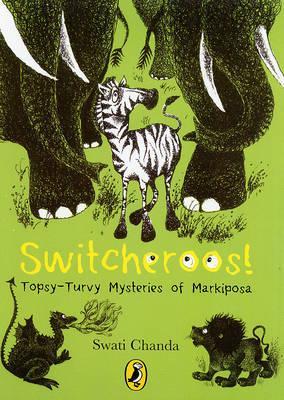
Switcheroos! Topsy-Turvy Mysteries of Markiposa by Swati Chanda, illustrated by Ajanta Guhathakurta

Switcheroos! Topsy-Turvy Mysteries of Markiposa
Swati Chanda
Illustrated by Ajanta Guhathakurta
2007, Puffin Books India
135 pages, fairy tale, kids, humor
FOUND: Starmark, Mani Square Mall, Kolkata

In this collection of children's stories, we meet the furry and feathery inhabitants of Markiposa. The main character, Rinzin, is a small green dragon with orange spots who, despite being vegetarian, has no friends - because a terrifying ball of flames streams from her mouth every time she tries to say hello! After a friendly rabbit figures out a solution to this fiery little problem, Rinzin establishes herself as the go-to problem solver for the whole forest. So when the lion prince loses his roar or a crow turns rainbow colored, they always go straight to Rinzin to find a solution. And the clever dragon often knows what to do- or, more specifically, often knows who will know what to do and where to find them.

I had to buy this book after reading the back cover in a bookstore. My expectation was that it would be funny and cute. I was not at all disappointed. Not only do these stories channel some of the cleverness of the Winnie-the-Pooh stories, but they also deal with issues that are important for children (and adults!) to think about.

For example, in one of the stories some young monkeys decide that they do not want to "monkey around" like they're supposed to. No, instead of throwing rotten mangos at people, they prefer to sit and ponder the Great Mysteries of the Universe. The leader of the group goes to Rinzin to complain about how these young monkeys are throwing tradition out the window. Rinzin doesn't quite see the problem with the young monkeys thinking and spending time in serious interests. But she agrees to talk to them and see what is up. In the end, they discover that there was an external reason for this personality change, and the monkeys are cured.

What can people learn from this story? First, that it is ok to do things that are different that what you are expected to do - even if your parents (or other adults) are unhappy about it. Rinzin doesn't really see the need to "fix" things; instead of forcing them to change, she lets the children express their opinions. This is the right way to deal with this kind of issue. But then she discovers that the monkeys' personality change is hasn't come from within them; it is a result of an external aspect of the environment. Because the monkeys' personality was changed through an external force, it is important to try to cure them. She searches for a solution and in the end they go back to their normal, carefree selves.

In another story, many of the meat-eaters of the forest have become converted to vegetarianism. While Rinzin is rather thrilled by this idea (she doesn't like the idea of animals eating other animals), she understands the problem that will arise: unfortunately, meat-eaters cannot get their proper nutrition from eating grass. So she tries to find the reason why they have suddenly converted, and finds that they were tricked into doing so. Because tricking others into doing something - even into doing something that we think is morally correct - is wrong, Rinzin solves the problem and the meat-eaters go back to eating meat. Although this may not be ideal from Rinzin's perspective, she would not condone forcing or tricking someone into doing something they don't want to do.

The one downside of this book is that it seems strangely incomplete, as if there should have been at least one more story. A traveler from far away, the winged unicorn Nash-4, appears in two of the stories, but his story is never told. How did he get to this forest? Why does he eat snakes? How will he get back home? To make this a truly classic work of children's literature, these questions would have needed to be answered.

All in all, though, this is an adorable children's book that has not gotten enough attention. I highly recommend it for both kids and adults, especially if you like the clever innocence found in the Winnie-the-Pooh stories.

Switcheroos! is available from Amazon US, Amazon UK, Amazon IN, and flipkart. 

Want to see more reviews of world literature and film? Follow me on twitter or like The Globally Curious on facebook to see updates!


Tuesday, July 7, 2015

Twice Upon A Time by Anjali Bhatia

Twice Upon A Time
Anjali Bhatia
2014 from Fingerprint! Publishing
300 pages, fantasy, environmental activism

Thank you to Fingerprint! Publishing for providing a review copy of this book. 

Arpit, the dissolute son of a wealthy businessman, is trying to drown his sorrows in alcohol, drugs, and sex while searching for a way to get back the person he lost (we later find out that this person is his childhood playmate and erstwhile girlfriend Mannat). At a drug-fueled party with the elites of Delhi, he meets Nishimaya (Nishi), a mystic and fortuneteller, who promises that there is a way to turn back the clock. Conveniently, he has also been looking for a conservation architect for an ecotourism hotel project, which just happens to be Nishi's day job.

With Nishi's guidance, Arpit takes part in "redreaming" sessions, which allow him to go return to the past through his memories and make different choices. This allows him to learn important information about his erstwhile love affair with Mannat - and about his father's nefarious dealings with international corporations that are wrecking the environment of their home village.

"Redreaming" as a way to uncover more information about the past is an interesting concept. Who wouldn't like to go back into their memories and see what happens if they make a different choice? But the way in which this process works is unclear and confusing. Apart from gaining useful information, how does following a different route in a dream have implications in real life? The author implies that there is some kind of connection (Mannat is reminded of things at the same time that Arpit "redreams" them), but the actual workings are hazy. If Arpit's "redreams" affect Mannat, shouldn't they also affect his father, ruining the work that they are doing to counter the old man's evil schemes? Why is Nishi supposed to be completely unemotional, and what are the effects of her emotional involvement, exactly? And why does Arpit suddenly gain the ability to "redream" without Nishi's help? The way that "redreaming" works would be the most interesting part of the novel by far, if we were given any information about it.

Friday, June 19, 2015

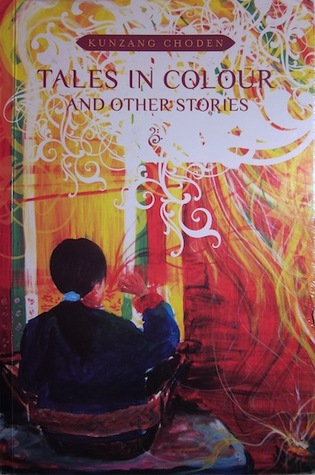
Tales in Colour and other stories by Kunzang Choden

Tales in Colour and other stories
Kunzang Choden
Originally 2009, I read 2012
145 pages, short stories, rural life, women's stories
Found: Kolkata Book Fair 2015

This collection of short stories by a female Bhutanese writer gives the reader access to a culture they would never otherwise be able to see: village life in the Himalayan Kingdom of Bhutan. The small kingdom perched in the mountains between India and China is famous for being one of the happiest countries in the world, but because of government rules restricting tourists and mandating a $200 USD/day minimum fee for all foreign tourists, it is notoriously difficult to travel in. Kunzang Choden's stories provide a much less expensive way to explore the Kingdom of Bhutan.

"The Woman who Lost her Senses"

In the village, traditional healers practice the Bon religion, a pre-Buddhist tradition that is frowned upon by the Buddhist monks. The healers channel the energy of a deity that is specific to each person, and they need to be taught how to do this properly (by someone with the same deity) or else they go mad. This story tells of a woman who was never taught and displays symptoms of this god-created madness.

"I Won't Ask Mother"

Yeshimo quit school at a very early age to take care of her ill mother and her three brothers. She envies them for being able to get an education and to have prospects in life, and wishes that she could learn more.

"The Advisor"

A woman rejected by her husband becomes the village busybody, giving everyone unsolicited advice- and continues to stick around even after she has died.

"These Things Happen"

Tensions arise between neighboring families when one of the girls is impregnated by a visiting official and blames her boyfriend, who lives next door.

"Look At Her Belly Button"

Tsewang Doma has been spending time in Thimphu with her brother and sister-in-law, escaping from the dull village life to go shopping and watch Hindi movies. She notices that the Hindi movie heroines have their belly buttons pierced, and she decides to stop at nothing before she gets one too.

Monday, June 15, 2015

Dangerlok by Eunice de Souza

Dangerlok
Eunice de Souza
2001, I read 2008
125 pages, satire, comedy
Found: secondhand at the Kolkata Book Fair 2015

This novella features the reflections of Rina Ferreira, a middle-aged denizen of Bombay (Mumbai) whose sardonic humor allows her to make the most of her relatively lonely life. A lecturer in English literature, Rina is single, compassionate, and devoted to her two parrots - even when they make a mess of her small flat. Or convince people that Rina is crazy by sitting on her head when she answers the door.

Rina has two primary outlets for her humorous reflections on life in Bombay: David, an old lover living abroad, to whom she writes frequent letters; and her household help, or bai, who enjoys gossiping about the city's "dangerlok" with her employer over cigarettes and cups of "jungly tea" (recipe: throw water, tea leaves, and milk into pot, boil, add sugar to taste). The result is a complex portrait of the amusing situations that arise in a major metropolitan city, through the observations of one middle-aged college professor.

When I first started reading this book, I was put off by the tone, which struck me as very similar to the narrator of The Giraffe's Neck (an IFFP book that I really disliked). But unlike in The Giraffe's Neck, in which the main character is a really a despicable person who judges people according to her interpretation of social Darwinism, Rina is the sort of person I would like to meet - someone who notices the amusing misspellings on the signs, or sees how the bus driver reacts to driverless rickshaws clogging the street in front of him. Rina actually notices things, and the things that she notices are important parts of the everyday life of the people around her. The term "dangerlok," instead of referring to people who are actually dangerous, refers to people who are annoying or are busybodies, traits that are extremely common in Rina's urban world.

Rina is a Goan Catholic, but she was born in Poona (Pune) and decorates her house with images of Hindu deities. Although as a middle aged woman, society says that she should be married, Rina is single and lives alone. She speaks her mind at conferences or academic discussions without hesitation, even if what she just wants to be the devil's advocate. (Example: during a meeting she responds to a proposal to make Postcolonialism a required course, Rina "said that hardly anyone seemed to be reading any more, just using texts to ride a hobby horse." Har har.) Based on her name and appearance, some people can't believe that she is an Indian citizen; she just shrugs and goes home to tell the stories to her bai. She purposefully subverts the categories that people want to place her in. Rina really just wants to have the freedom to be herself, which she does by not paying attention to others' opinions.

I very much enjoyed the letters to David which were interspersed with the rest of the text. Hearing only one side of the conversation gives the reader an insight into Rina's thoughts and feelings toward (possibly?) her former student and lover. The other sections, which are written in 3rd person without quotation marks to indicate who is speaking, sometimes become confusing. After you get used to the style, it really suits the story's sarcasm.

Dangerlok is a very short book; it only took me about 1.5 hours to read. It's a clever, funny novella about life in the big city, in modern India, and as someone who doesn't fit into anyone's preconceptions - and doesn't want to. I want to be like Rina when I grow up.

Dangerlok is available from Amazon US, Amazon UK, Amazon IN, and flipkart. 


Further Reading: 

Read articles from Eunice de Souza's column in the Mumbai Mirror


Want to see more reviews of world literature and film? Follow me on Twitter or like The Globally Curious's facebook page!

Saturday, June 6, 2015

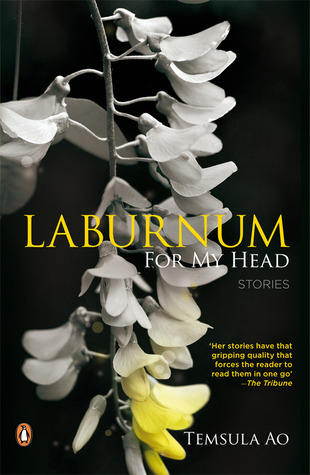
Laburnum For My Head by Temsula Ao

Laburnum For My Head
Temsula Ao
2009, Penguin Books India
107 pages, short stories
Found: Starmark, Mani Square Mall, Kolkata

This is a book of short stories by the Padma Shri winner Temsula Ao, a retired English professor at the North-Eastern Hill University, Shillong. In 2013, she was awarded the Sahitya Academy Award based on this collection of stories.

Because this is a diverse collection, encompassing many themes and writing styles, I will give a brief introduction to each.

"Laburnum for my head"

A woman loves the Laburnum flower, but has no success at cultivating them in her garden. She decides that it would be better to have a Laburnum plant on her gravestone rather than an ugly tombstone.

"Death of a Hunter"

The best hunter in the area finds himself, once again, being forced to hunt a wild animal that he does not really want to hurt. He is worried about the creature's intelligence and what it will mean if he kills it.

"The Boy Who Sold an Airfield"

Set at the end of WWII, a young boy makes his way into the confidence of some American soldiers, ending up with some property that he needs to sell.

"The Letter"

The normally peaceful people of a village are tired of threats and extortions by the insurgents hidden in the nearby hills. Finally an attack by a group of freedom fighters proves to be the last straw, and the villagers retaliate.

"Three Women"

In a series of connected stories, a grandmother, mother, and daughter find their pasts intertwining with the concepts of motherhood and family.

Tuesday, June 2, 2015

The Hen Who Dreamed She Could Fly by Sun-mi Hwang, translated by Kim Chi-Young

The Hen Who Dreamed She Could Fly
Sun-Mi Hwang
Translated by Kim Chi-Young (from Korean)
Illustrated by Nomoco
2000, I read 2013 translation
144 pages, animal fable, motherhood
Found: Starmark, Mani Square Mall, Kolkata

Sprout has always imagined life outside of the confining walls of the egg-laying hut, raising chicks all her own. Depressed, she stops eating, and her eggs stop coming, leading the farmer to take her out to be slaughtered. But she escapes! In time, she becomes friends with an injured wild duck, Straggler, whose partner has been killed by the local weasel. With Straggler's help, Sprout incubates an abandoned egg, which turns out to be the duck couple's baby. When Straggler dies and the egg hatches, Sprout decides to care for this baby as her own - despite the challenges and the ridicule from others caused by their obvious mismatch.

The simply told story narrates Sprout's struggles to raise her baby duck - Greentop, as she calls him - in the inhospitable land outside of the farm's society. Despite the cold winter, deadly weasel, family arguments and other problems, Sprout's competent attitude and motherly perseverance give her the strength to raise Greentop and assert her own identity at the same time.

This is a beautifully told fable about independence, identity, and motherhood. Despite the similarities with children's literature (which have been emphasized by the English-language promotion of the book), Sprout's journey has more to offer people with more life experience. In Korea, it is considered to be an adult novel, and I want to emphasize that aspect.

Tuesday, May 26, 2015

The End of Days by Jenny Erpenbeck, translated by Susan Bernofsky

The End of Days 
Jenny Erpenbeck
Translated by Susan Bernofsky (from German)
2012, I read 2014 ebook version
239 pages, meditation, family, politics, life and death

A baby dies and the family falls apart.
But what if it didn't?
A young woman commits suicide after being rejected in love.
But what if she didn't?
A German emigre to the Soviet Union is accused of Trotskyism and sent to a work camp, where she dies.
But what if she wasn't?
A famous East German writer dies falling down the stairs.
But what if she didn't?
The same woman dies comfortably in a nursing home at the ripe age of 90.

Jenny Erpenbeck's novel traces the life of a woman in Europe during the 20th century, and, specifically, how she could have died at different parts in her life and what the fallout would be for those around her. The author gives us five scenarios, connected by musings on how things could have turned out differently, if, for example, she had gone down the stairs five minutes later. Then, the following section assumes that she had not died, and the alternative scenario is the one that actually happened.

It's sort of like a choose-your-own-adventure book for grown-ups.

In less capable hands, this style of writing could have turned into a terrible gimmick. But Erpenbeck manages to pull it off, all while including some beautiful commentary about the connections between people and the role of history in our lives. While not my favorite book from the IFFP longlist, I can understand why it has such widespread appeal.

Monday, May 4, 2015

The Bronze Sword of Tengphakhri Tehsildar by Indira Goswami, translated by Aruni Kashyap

Source: Goodreads
The Bronze Sword of Tengphakhri Tehsildar
Indira Goswami (1942-2011)
Translated by Aruni Kashyap (from Assamese)
Published by Zubaan 2013
132 pages, folklore, nationalist
Found: Kolkata book fair 2015

This is the last book by the well-regarded Assamese author Indira Goswami, known for her use of literature to advocate for social and political change. Drawing on the idea of a strong female character described in local Bodo folktales, Goswami demonstrates the importance of the Bodo people in the nationalist fight against the British colonialists and therefore in the formation of the Indian nation and the state of Assam (an important political statement due to the continued violence and calls for the creation of Bodoland as a separate state).

Tengphakhri is a tribal Bodo woman who was chosen to act as a Tehsildar, or tax collector, for the British in the late 1850s. Accompanied by her group of soldiers, she rode through the villages to collect taxes, using force if necessary. She has a close relationship with several of her British superiors, who she admires. When other British officers come to take over, leading to changes in policies, she is compelled to choose whether she wants to continue working with them or join the freedom movement.

The description of the character Tengphakhri is interesting. She is obviously a strong person, who can handle horses and do the duties required by her job. Like most women in fiction, "Her beauty and personality mesmerized everyone. They had just one complaint: why doesn't Tengphakhri speak?" She is mostly a silent character, and the story is told through descriptions of her sometimes ambivalent actions.

While this story is based on a folktale, it doesn't read like one. This is a flaw, in my opinion. The mostly emotionless descriptions of Tengphakhri's actions were not interesting to me. I did not enjoy this book for the story or the characters (who were disappointingly flat).

The only thing that seemed interesting to me is the way Goswami tried to use this book to protest against the violence in Assam related to the Bodoland movement. But because that was the purpose of this novel's existence, nationalist sentiments took center stage, stealing the focus from the characters and story. If you are interested in Assamese politics, especially the question of an independent Bodo state, you might find something in this book. If not, it's not really worth your time.

Further reading: 

Wikipedia article on Bodoland 
"Bodoland Movement: A Study" by Topu Choudhury (a scholarly article on the history of the movement) 
"Why is Indira Goswami Great?" by Aruni Kashyap (translator of this novel) 

Follow The Globally Curious on twitter or facebook to see more reviews of international movies and cinema! 


Thursday, April 23, 2015

Sin Is a Puppy That Follows You Home by Balaraba Ramat Yakubu, translated by Aliyu Kamal

Source: Goodreads
Sin Is a Puppy That Follows You Home
Balaraba Ramat Yakubu
Translated by Aliyu Kamal (from Hausa)
Originally 1990, I read first English edition 2012
126 pages, social criticism, family drama, soap opera, pulp

Many thanks to Blaft Publications for providing me with a review copy of this book! 


In this book, I tell a story about a type of man found commonly in Nigeria who regards a married woman with children as a sort of slave to be bought or sold at the marketplace. These men think they may treat such a woman as poorly as they like, since they believe her to be completely worthless. They may be rich and comfortable themselves, yet refuse to feed and clothe their own families - while simultaneously denying anyone else the right to do so. - Author's preface
This short novel is the first example of the Hausa-language popular press to be translated into English. As such, it has the potential to introduce the reader to a world that they otherwise would never have realized existed.

Balaraba Ramat Yakubu is a Nigerian writer and filmmaker. In this book, as she states in the preface, she attempts to draw attention to a specific social phenomenon: men who neglect their wives and children in favor of spending money on themselves. I do not know how common this is in Nigeria, but the author's decision to focus on it indicates that it is (or was) probably more common than I expected.

Sunday, April 12, 2015

Tiger Milk by Stefanie de Velasco, translated by Tim Mohr

Source: Goodreads
Tiger Milk
Stefanie de Velasco
Translated by Tim Mohr (from German)
2014, I read ebook edition
245 pages, friendship, immigrant story, poor families, loyalty, drugs sex and alcohol

Nini and Jameelah, two high school students in Berlin, are the best of friends. They spend their time hanging out, sneakily drinking Tiger Milk (a concoction of brandy, milk, and passion fruit juice that they invented) in public, doing drugs, and making pocket money by prostitution. When they witness a murder in their housing complex, will they risk their own safety and tell the police what they saw? Even if that might mean Jameelah will be deported, one of their friends will be put in prison, and their friendship may very well end?

This is not the kind of book that I normally read, but for the sake of IFFP, I finished it. Some parts made me feel physically sick, especially the way the girls respond to the murder: Jameelah takes the victim's jewelry, dropping it into their container of Tiger Milk, which she then drinks from. (I forgot to mention that they also like shoplifting, which involves wandering through stores with open containers and dropping jewelry into the drink. They don't even keep most of the things they steal.) If Tiger Milk doesn't sound bad enough already, why don't you add some fresh blood to it as well?

I appreciate that this author is attempting to show the edgy side of teenage life among poor people in Berlin. The writing shows the point of view of the characters, and encourages the reader to have some sympathy for the people in the story. If you like that sort of thing, you might like this book.

The author also demonstrates some of the struggles that immigrant families face in present-day Germany. Jameelah and her mom are immigrants from Iraq, and have been in Germany long enough that Jameelah doesn't even know Arabic. And yet they find themselves facing possible deportation back to Iraq if the government finds that they have done something wrong. Obviously this is unfair on Jameelah, who has only ever known what it's like to live in Germany.

Overall, this was my second-least favorite book from the IFFP longlist. It was only surpassed by The Last Lover, which was so bizarre I couldn't even understand what the book was trying to say. I'm glad that Tiger Milk did not make either the shadow panel or the official shortlist. (Read the shadow panel's reviews of all the longlist books here.)

If you're interested in edgy Young Adult books about sex, drugs, alcohol, and murder, you might like this book. If not, avoid it.

You can buy Tiger Milk from Amazon or wherever books are sold. 

Did you like this review? Keep in touch! Follow The Globally Curious on Twitter or Facebook.